Background photo: Floor of the New York Stock Exchange, ca. 1950s. Photograph by Sylvania Electric Products, Inc. New York Stock Exchange Archives, NYSE Group, Inc.
Muriel Siebert, 1943. MSC, b. 145, f. 6.
I can look at a page of numbers and they light up and tell me a story.1 —Muriel Siebert
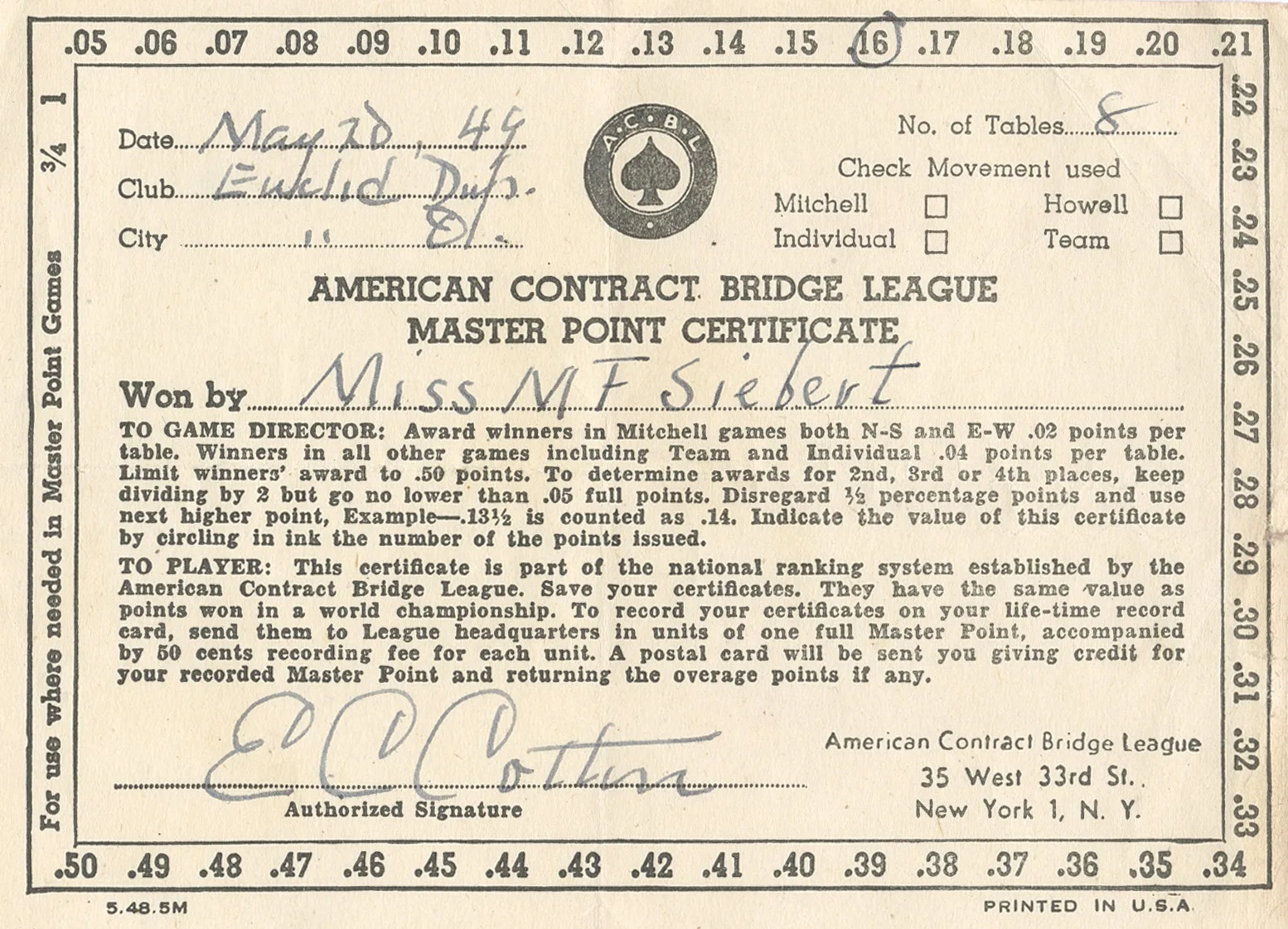
Muriel F. Siebert was born in 1928 in Cleveland, Ohio, to Margaret Siebert, a homemaker, and Irwin Siebert, a dentist.2 After graduating from Cleveland Heights High School in 1946, she attended Flora Stone Mather College, the women’s division of Western Reserve University (now Case Western Reserve), where she planned to major in accounting. She showed an aptitude for math and took part in the bridge league.
Siebert left college her junior year when her father became ill. “I came from a family where I didn’t know what money was. My father had cancer. He was a guinea pig in a series of operations, and he died broke,” she wrote. "That’s why I dropped out of college."3 In 1953, Siebert visited New York City and took a tour of the New York Stock Exchange (NYSE). "What I saw as I looked down from the visitors’ gallery was a sea of men in dark suits," she remembered. “But after absorbing all that fierce energy, I turned to my friends and said, 'Now, this is exciting.'"4 The following year, in a used Studebaker and with $500, Siebert returned to New York to look for work.
"American Contract Bridge League Master Point Certificate Won by Miss M. F. Siebert," May 1949. MSC, b. 145, f. 6.
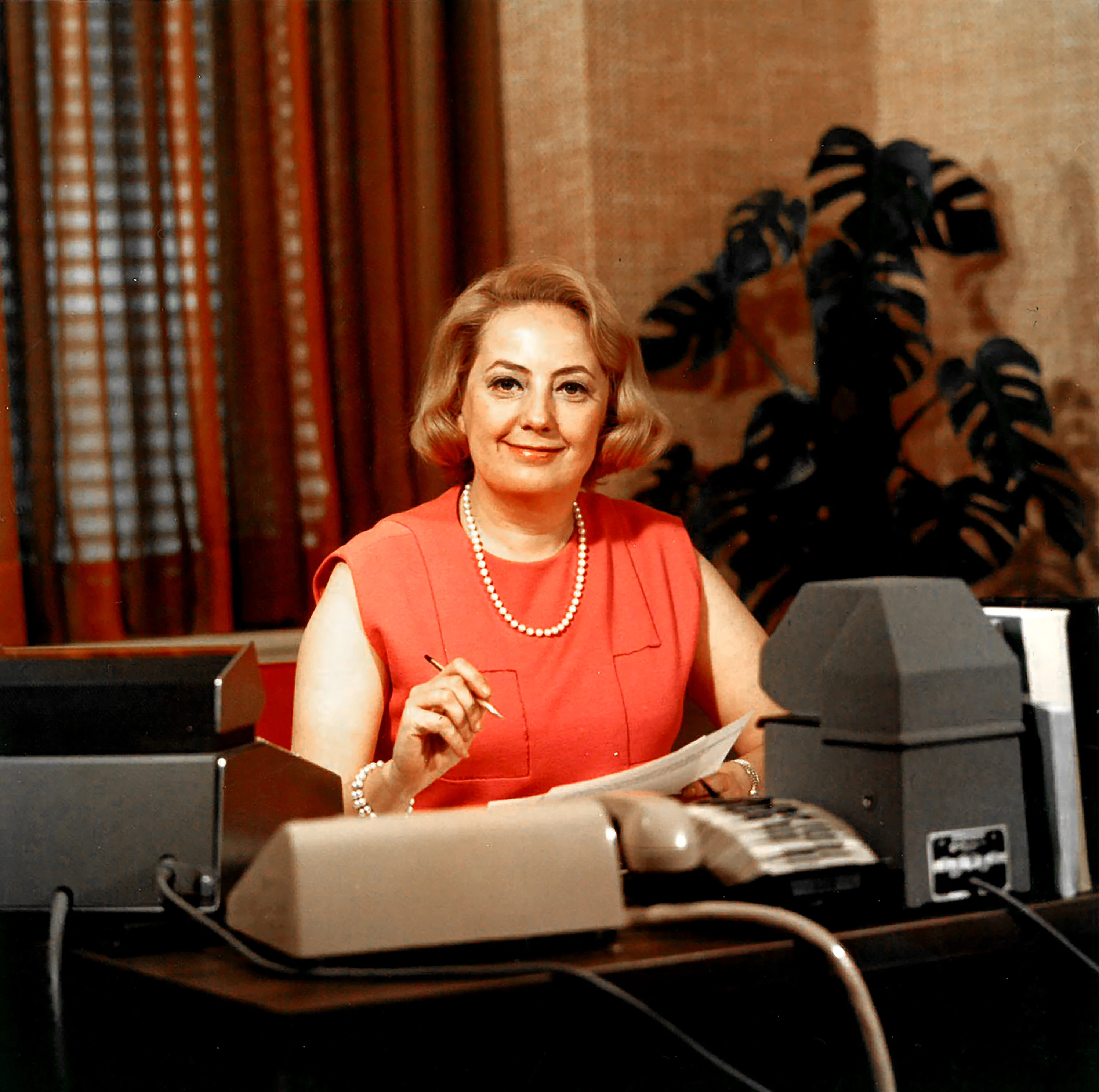
Muriel Siebert, ca. 1960s. New York Stock Exchange Archives, NYSE Group, Inc.
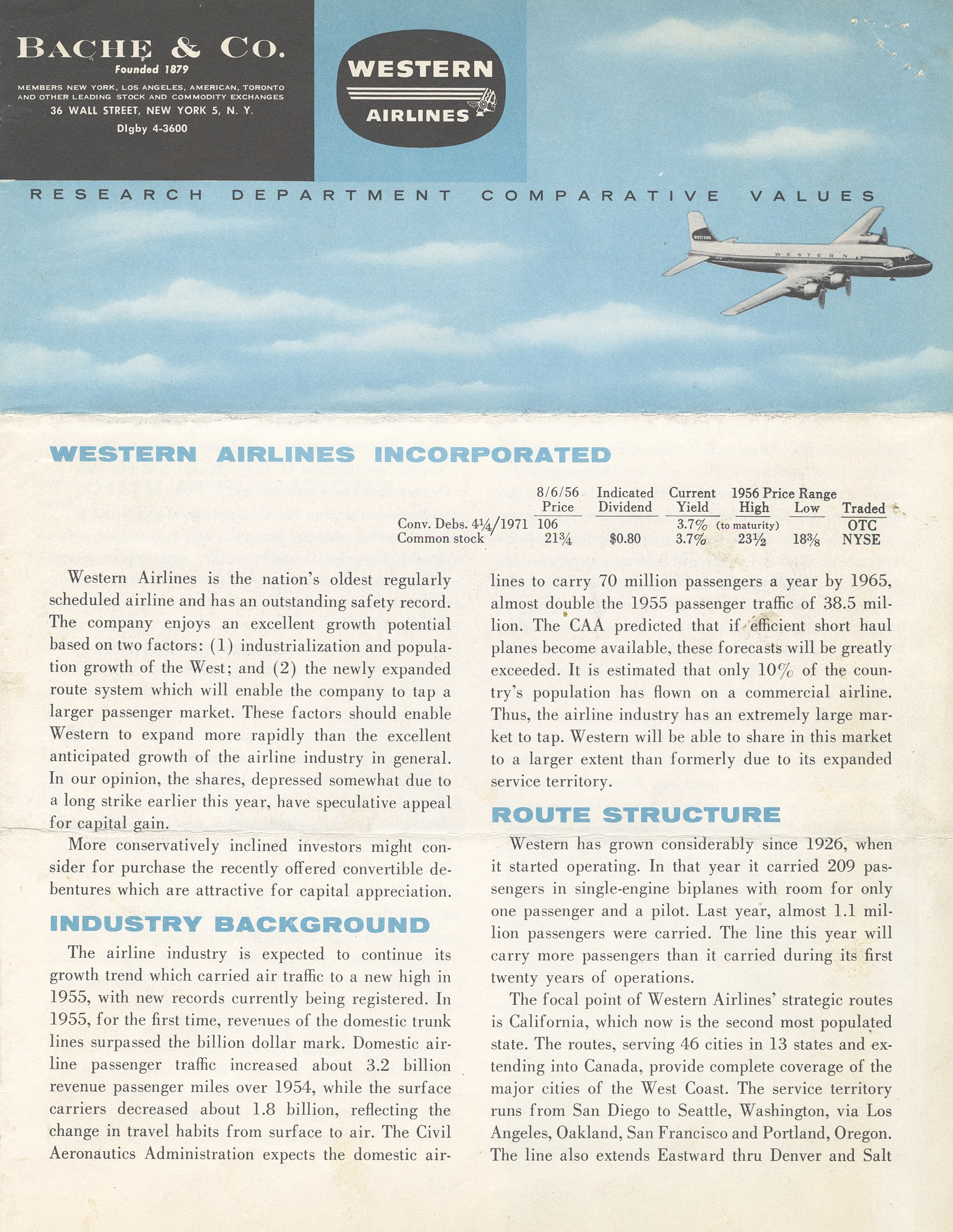
After being turned down for a job at the United Nations for not being fluent in two languages and one at Merrill Lynch for not having a college degree, Siebert found a position at Bache & Co. as a trainee in the research department for $65 a week. At that time, transactions took place via the telephone and the teletype machine, with typed messages transmitted through electrical pulses and printed onto paper. "My responsibility was taking telexes to the senior analysts from Bache brokers in out-of-town branches who had questions on behalf of individual clients or institutions."5
Although Siebert considered herself a "glorified gofer," she began to learn about the workings of various companies along with the art and science of market analysis. "The financial data that indicate how a company fits into the economy make up the science part; seeing a pattern in those numbers and then looking ahead is an art," she explained.6 "I can look at a page of numbers and they light up and tell me a story."7
Bache promoted Siebert to one of three female analysts. In the 1950s, women found work in banking and investment services primarily as secretaries, teletypists, and data entry clerks. It was in the smaller brokerage firms like Bache & Co. that women began to find openings as research analysts. "Mickie was among the very first women to become a research analyst, but her start was typical because it was in these new research departments where women found a place for themselves beyond the secretarial pool or the occasional token hire as a salesperson or broker," Paulina Bren writes in She Wolves: The Untold History of Women on Wall Street.8
Muriel Siebert visiting an airline factory, ca. 1960s. MSC, b. 141, f. 1. Robert S. Lerner Photography, LLC.
Of her time at Bache, Siebert remembers, "Every analyst was allowed to dump an industry on a trainee. The old rail analyst dumped the airlines on me, because he didn’t think the airlines would be able to pay for the new jets. I also got to write the first report on the value of motion pictures shown on television."9 Siebert became a well-regarded specialist in the airline industry, and she often met with aviation executives and engineers. "The analysts always treated me as one of the guys, the companies always treated me as one of the guys—I mean, the aviation companies loved me," Siebert said.10 She became the first woman admitted to the Wings Club, a society of aviation professionals founded in 1942.
Siebert moved from research analysis into institutional sales, working with mutual funds, pension funds, national financial institutions, and banks. "I developed a following in institutions: when I recommended the sale or purchase of a stock, the institutional salesperson knew that I knew the numbers on it," she wrote.11 Following her principle of "know a lot about a little," Siebert focused on fifteen to twenty companies. "I tried to study everything there was to know about management, production, suppliers, competition, research and labor conditions. If a company had a disappointing quarter, I could figure out whether it was a systematic problem in the organization or something beyond its control. Companies were willing to provide information to investors, large or small, but they weren’t going to blurt out everything. You’ve got to know the right questions to produce the right answers."12
Bache & Co. doubled Siebert’s salary within two years, but her male colleagues earned more. "Realizing that I was underpaid gave me the gumption to move on," Siebert said.13 In 1958, she looked for work elsewhere. "Sending my résumé around didn’t produce a single response," Siebert wrote. "When the placement bureau of the New York Society of Security Analysts," of which she was a member, "sent out the same résumé using my initials rather than my first name, M. F. Siebert got an interview—and a job in the research department of Shields & Co., for $9,500 a year."14 Siebert became a senior securities analyst at Shields & Co. (1958–1960) and then one of the first woman partners with the NYSE member firms Stearns & Co. (1960–1961), Finkle & Co. (1962–1964), and Brimberg & Co. (1965–1967).15
Bache & Co. Research Department Comparative Values, Western Airlines, August 1956. MSC, b. 1, f. 3.
Sue Herera, Women of the Street: Making It on Wall Street—The World’s Toughest Business (New York: John Wiley & Sons, Inc., 1997), 86.back to text ↑
Irwin Siebert also had a degree in engineering. He received patents in the 1920s and ’30s for an amusement device associated with the Ferris wheel.back to text ↑
"Interview with Muriel Siebert," Crimson & Brown Associates 3, no. 1 (1997), 46. Muriel Siebert Collection, Box 136, Folder 9.back to text ↑
Paulina Bren, She Wolves: The Untold History of Women on Wall Street (New York: W. W. Norton & Co., 2024), 42. Another woman working as a securities analyst in the 1950s was Mary Wrenn at Merrill Lynch, Pierce, Fenner & Smith. In 1967, Wrenn became the first woman vice president of a worldwide investment firm; in 1978, she became the first woman managing director of Merrill Lynch Capital Markets.back to text ↑
"Interview, Muriel Siebert," Bloomberg Personal, October 1994. Muriel Siebert Collection, Box 135, Folder 1.back to text ↑
Siebert and Ball, Changing the Rules, 11. Founded in 1937, the New York Society of Security Analysts was established to uphold ethical standards and develop improved analytical methods.back to text ↑
Siebert also served as an aviation consultant with Selig Atschul in 1957–1958 and as an analyst with Industries Management Corporation in 1958.back to text ↑

.jpg)
.jpg)