Interview Summary
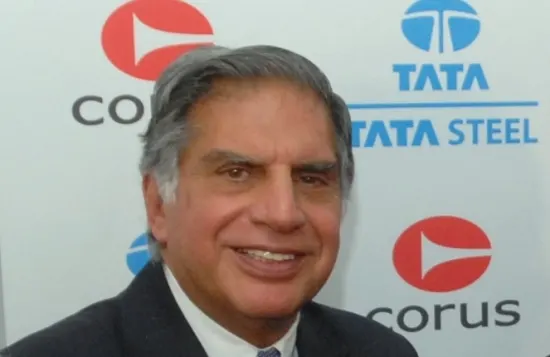
Ratan Tata is one of India’s most iconic business leaders and was the chairman of Tata Group, an Indian public multinational conglomerate based in Mumbai, between 1991 and 2012. Tata opens this interview by reflecting on the difficult state of the Group when he became chairman. Tata discusses how he felt the need to bring in new board members who would allow for change and modernization of the Group, and he also explains the need to restructure the Group after the end of the so-called License Raj and the advent of the World Wide Web.
In 1991, India experienced an economic crisis which caused even profitable companies within India to struggle. In this interview, Tata explains that it was this crisis that influenced him to start considering expanding beyond India as he recognized the importance of not relying on any one economy fully. As a result, the Group began its global expansion process, first establishing Tata Africa Holdings in South Africa in 1994, and in 1998, Tata Motors started exporting commercial vehicles to the country. Then, in 2000, Tata Tea acquired its first major international brand, the British-owned Tetley Tea. In 2002, Tata Motors acquired Daewoo, a South Korean automotive company, and 2007 Tata Steel acquired Corus, an Anglo-Dutch steel company. In 2008, Tata Motors made another large acquisition of Jaguar Land Rover in Britain after being approached by Ford. In this interview, Tata describes this acquisition process in particular and the challenges faced, including pushback from employees from Jaguar Land Rover UK who feared losing their jobs. Tata uses these examples to explain that the Group only looked at acquiring companies that would give them a strategic advantage.
Tata continues the interview by discussing his experience with Tata Nano, a small, compact, and affordable car which Tata Motors began manufacturing in India in 2008. He reflects on the processes that went into building the Nano for the mass market including the design process, the marketing process, the development of the business, and the challenges and mistakes that constrained its success. Tata argues that the company under-estimated that the base of the pyramid market was demanding for status. Instead, his company wrongly positioned the brand as a product which a consumer would buy if they could not afford to buy another car.
To conclude the interview, Tata deplores what he discerns as deteriorating ethical standards in much of Indian business over recent decades and sets a vision for India as a country that should offer equal opportunity for all of its citizens. Finally, he describes India’s environmental concerns including severe water and air pollution and calls on laws to be enforced for everyone, stating that there needs to be a zero-tolerance policy for corruption around these issues.
[W]e need to encourage Indian venture funds ... the important change is that we have a situation where some young people can get together, get an idea, and find the funds to establish and implement that idea, which didn’t exist five years ago.
Download Interview Transcript
Additional Resources
Emerging Giants: Competing at Home-How Emerging Market-Based Companies Can Build Competitive Advantage at Home [Harvard Business Press Chapters]
Emerging Giants: Going Global-How Emerging Market-Based Companies Can Overcome Barriers to Competing Abroad [Harvard Business Press Chapters]
House of Tata: Acquiring a Global Footprint [HBS Case]
"Right Way to Restructure Conglomerates in Emerging Markets" [HBR article]
[HBS Case]
House of Tata—1995: The Next Generation (A) [HBS Case]
Tata Nano: Dilemmas In Sustainable Development [HBS Case]
Tata Nano—The People's Car [HBS Case]
Creating a Corporate Advantage: The Case of the Tata Group [Indian School of Business]
Tata Motors' Integration of Daewoo Commercial Vehicle Company [Ivey Publishing]
Tata Motors: Compensation Restructuring [Ivey Publishing]
“Who is Ratan Tata?”
Nikkei, September 4, 2014
“Ratan Tata: The Visionary,” Business Line, January 1, 2013
“Ratan Tata, India's Corporate Czar, Retires With a $500 Billion Vision,”
Bloomberg, January 3, 2013
“Ratan’s Early Days Were Tough,” India Today, February 14, 2013
“Ratan Tata’s Legacy,”
The Economist, December 1, 2012
FTF Ratan Tata 28 6 2000 [Interview posted to Youtube]
R. M. Lala, “Challenges and Opportunities of Economic Liberalization:The Tata Group,” in Medha M. Kudaisya, ed., The Oxford Indian Anthology of Business History. Oxford University Press, 2011
Jayati Sarkard, “Business Groups in India, “ in Aslı Colpan, Takashi Hikino, and James R. Lincoln, eds., The Oxford Handbook of Business Groups. Oxford University Press, 2010
Dwijendra Tripathi, The Oxford History of Indian Business. Oxford University Press, 2004
Ashis Ray, "It's sad Mukesh Ambani lives in such opulence: Ratan Tata," Times of India, May 22, 2011.
Simon Mundy and Victor Mallet, "Tata boss: ‘I needed to stop the bleeding’," Financial Times, February 19, 2018.
Tata Central Archives
Tata Group International Businesses, 1903–2014 [Historical Data Visualization trends over time map]
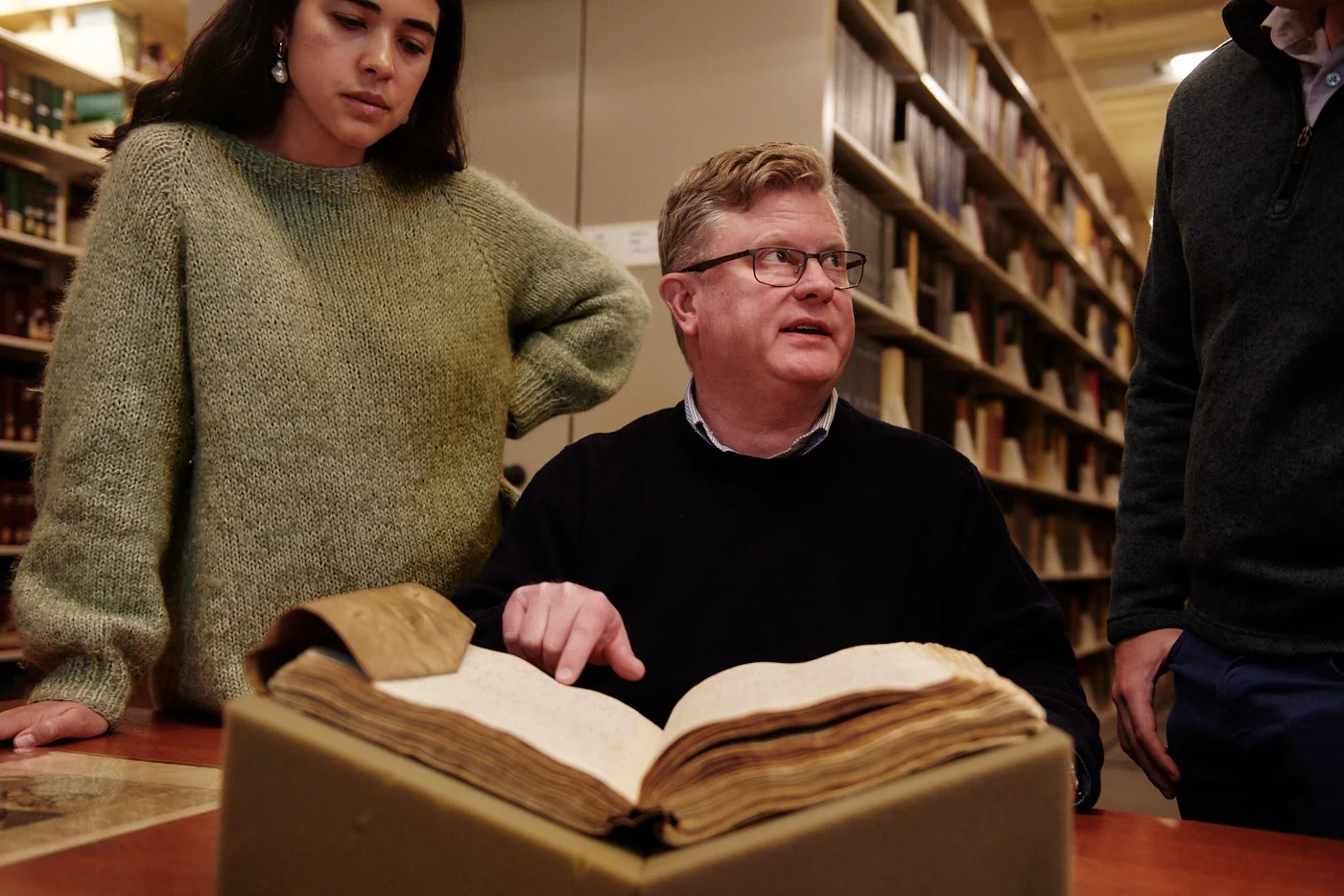
Video file of this interview available at Baker Library Historical Collections, histcollref+hbs.edu. Harvard ID holders can access the full-length video above.
Interview Citation Format
"Interview with Ratan Naval Tata, interviewed by Tarun Khanna, April 27, 2015, Creating Emerging Markets Project, Baker Library Historical Collections, Harvard Business School, http://www.hbs.edu/creating-emerging-markets/."