
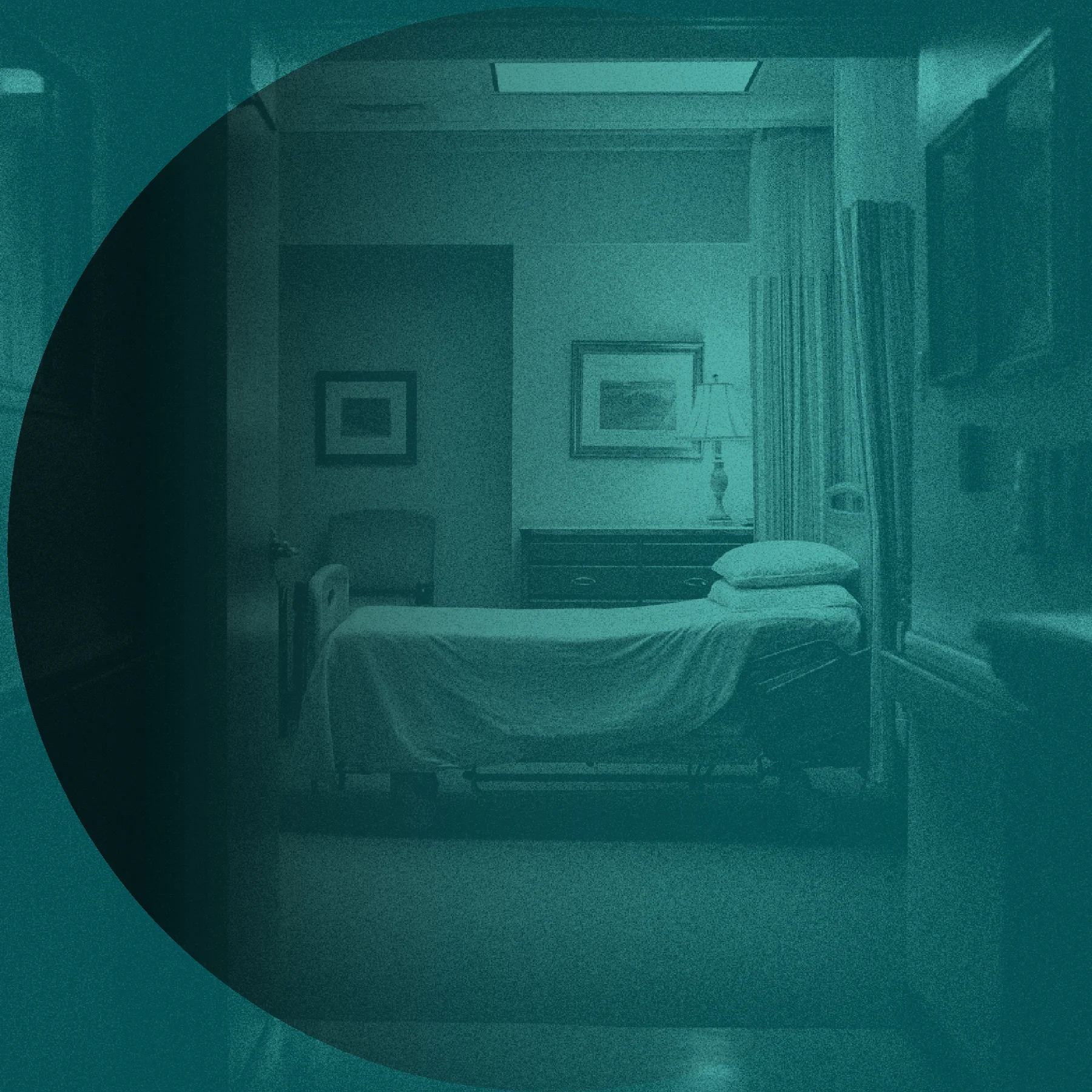
Financial instability at some nursing homes is resulting in sicker patients and more hospital care. The cause? Chapter 11 bankruptcy.
Patients living in skilled nursing facilities that operate under bankruptcy protection are more likely to be hospitalized and spend more days in the hospital. Problems largely stem from the high staff turnover that comes with bankruptcy, research by Harvard Business School Assistant Professor Samuel Antill shows.
“Such hospitalizations represent major harms to patient health, as they imply the patient’s health deteriorated sufficiently to qualify for admission to the hospital,” Antill writes in the working paper “Healthcare Provider Bankruptcies,” which was released in May.
Even if nursing home residents escape hospitalization, they are more susceptible to bedsores and subject to harm from the use of restraints when a facility is in Chapter 11, according to the study.
The findings come as an increasing number of skilled nursing facilities in the US are filing for Chapter 11 bankruptcy. Genesis HealthCare, one of the nation's largest skilled nursing providers, filed for Chapter 11 protection in July. Meanwhile, in 2024, 57 health care companies filed for bankruptcy, the second-highest level in six years—and senior living and care represented a fourth of those filings, according to a 2025 Gibbins Advisors report.
What’s more, experts have warned that the recently approved One Big Beautiful Bill Act could place hundreds of US nursing homes at higher risk of closure due to reductions in Medicare payments and other financial constraints.
Antill, who offers advice for managing health care bankruptcies, coauthored the working paper with Ashvin Gandhi, assistant professor at the University of California at Los Angeles, Georgetown University Assistant Professor Jessica Bai, and Stanford University Assistant Professor Adrienne Sabety.
Experienced nurses flee bankrupt nursing homes
Antill’s past research has shown how a Chapter 11 filing can have adverse effects in many industries—on a company, its employees, and its customers. After a retailer files for Chapter 11, customers often lose faith in the business. With that in mind, the researchers wondered: Could disruptions extend to nursing homes and the 1.2 million people who live in them?
The answer is yes. The researchers found that a bankruptcy filing increases employee turnover, as more experienced nurses at the facility leave for more secure work elsewhere. Nursing homes then replace these employees with new nurses, many of whom work on a contract basis.
While new nurses are often just as qualified, they don’t have the same intimate knowledge of their patients, which can make a big difference in the level of care they provide, Antill notes.
“This is a setting where the consumer is so vulnerable,” he says. “Nothing against the workers themselves, but rather, it takes some time to build a connection with a patient. That's important, and when you see a facility relying heavily on contract labor, it's kind of a red flag that something's wrong.”
The impact of health care bankruptcies on senior care
The researchers studied all health care bankruptcies filed in the US from 2010 to 2020. Nursing home bankruptcies at the chain level during that period totaled 180, representing 727 facilities.
Using high-frequency payroll and census data covering nearly every nursing home worker in the US, along with surveys and interviews with nurses, Antill and his colleagues found that bankruptcy filings:
Increase staff turnover. In the year after a bankruptcy filing, weekly worker separations increase by 10% on average, compared to other facilities.
Worsen the firm's performance on unannounced inspections. Inspectors cite facilities for more deficiencies immediately following bankruptcy.
Boost hospitalizations. Patients of bankrupt facilities increase their chances of being hospitalized by 4% and increase the number of days they spend in the hospital by 7.9% on average.
Lead to additional patient problems. Replacing a high-tenure nurse with a low-tenure worker increases the rate of negative patient outcomes by 10 percentage points. Bankruptcies increase the use of physical restraints and bedsores by 77% and 14% on average, respectively. Regulators use both as indicators of low-quality care and potential abuse.
“A patient’s health must have substantially declined for hospital staff to admit them as an inpatient,” the authors write. “In fact, these bankruptcy-induced hospitalizations appear to be more serious than typical hospitalizations.”
How to manage health care bankruptcies
If bankruptcy side effects are causing more patient problems, what’s the cure? Antill recommends three potential regulatory solutions:
Close monitoring of bankrupt facilities
After a nursing home files for Chapter 11, regulators should look for signs of additional financial distress, such as filing for liquidation. In addition, regulators should watch for other warning signs: increases in patient hospitalizations, staff turnover rates, and patient medical problems, like bedsores and restraints.
Government intervention for struggling facilities
When banks fail, the Federal Deposit Insurance Corporation (FDIC) steps in with a receivership process, and the government temporarily takes control until a buyer can be found. A similar solution could be applied in health care, with a regulator taking over a nursing facility until a buyer is identified. Sale proceeds could be used to pay back creditors, Antill says.
Limiting health care debt
Total debt in the US health care sector has more than doubled between 2019 and 2024. Highly leveraged debt deals can quickly lead to bankruptcy when financial conditions spiral. Antill notes that in the banking industry, regulators set limits on the amount of debt banks can carry. Why not apply the same approach to health care? Regulators could also make debt financing less attractive by cutting existing debt subsidies and excluding interest payments from consideration in determining reimbursement rates.
“The government could cap how much debt they're allowed to use, and that can help prevent some bankruptcies,” Antill suggests.
Image created with asset made using Midjourney, an AI tool.
Have feedback for us?
Healthcare Provider Bankruptcies
Antill, Samuel, Ashvin Gandhi, Jessica Bai, and Adrienne Sabety. "Healthcare Provider Bankruptcies." NBER Working Paper Series, No. 33763, May 2025.