Interview Summary
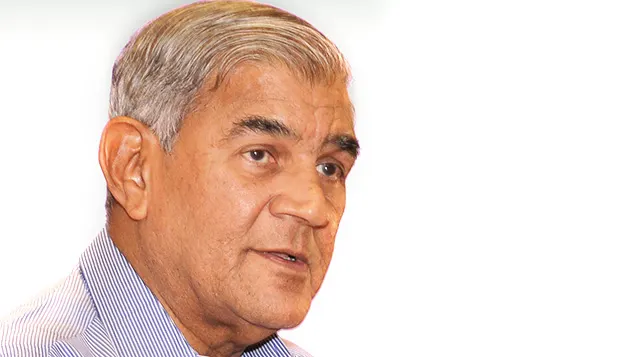
Suresh Krishna founded Sundram Fasteners, now the largest manufacturer of industrial fasteners for auto and non-auto use in India and a prominent Indian-owned global firm, in Chennai in 1962. It grew out of the TVS group, established in 1911 by T V Sundaram Iyengar, which had developed from a large automotive components business. But Sundram Fasteners was the first venture which was wholly Indian-owned rather than relying on joint venture partners, and it was the group’s first manufacturing business. In this compelling interview, Krishna explores the challenges he faced building the business from scratch, including the acquisition of foreign technology and the acquisition of his first big supply contract with Tata Motor, set against the then highly restrictive state-controlled business environment. Krishna describes the transparent corporate culture at the firm, which enabled it to avoid the strikes then prevalent in Indian industry, and the emphasis on quality which enabled it to secure global firms as customers. Soon after liberalization began in 1991, which Krishna describes as feeling like someone opened a jail door, the company secured a contract to become the global supplier of radiator gaps to General Motors, enabling an increase in scale and representing a landmark breakthrough for Indian manufacturing. Over the following decades, the interview describes how Sundram Fasteners accumulated accolades, including being the first and only Indian company to receive “Best Supplier Award” from General Motors, launched global manufacturing in China and Europe, and steadfastly avoided doing business with any industry in which the Indian government was involved. Krishna stresses his passionate belief that the most important goal of Indian industry today is to contribute to the eradication of poverty in the country.
There were no secrets in the company at all … if you keep on telling the truth, it builds a certain amount of confidence in the work force.
Download Interview Transcript
Additional Resources
“One Hundred Years of Fortitude,” Financial Express, October 14, 2011
“Suresh Krishna to take over as chairman of TVS Group's holding company,” Business Standard, March 20, 2015 http://www.business-standard.com/article/companies/suresh-krishna-to-take-over-as-chairman-of-tvs-group-s-holding-company-115031900158_1.html
a href="http://m.thehindubusinessline.com/companies/sundram-fasteners-at-50-bolted-by-trust-transparency-and-communication/article9691605.ece">"Bolted by Trust, Transparency and Communication," The Hindu Business Line, May 11, 2017.
Video file of this interview available at Baker Library Historical Collections, histcollref+hbs.edu. Harvard ID holders can access the full-length video above.
Interview Citation Format
"Interview with Suresh Krishna, interviewed by Tarun Khanna, Chennai, India, December 19, 2012, Creating Emerging Markets Project, Baker Library Historical Collections, Harvard Business School, http://www.hbs.edu/creating-emerging-markets/."