Interview Summary
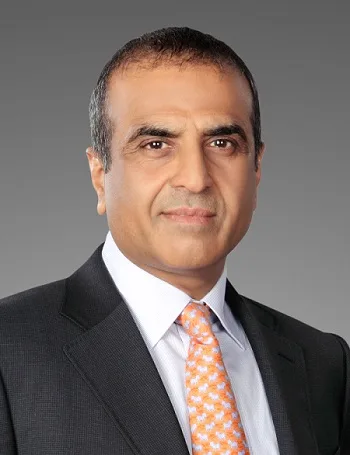
In this interview, Sunil Mittal, founder and CEO of Bharti Enterprises, narrates the circumstances and motivations that led him to found Bharti Enterprises, as well as some of the strategies he used to grow the company to a world leader in telecommunications.
His career began in trading, where he came into contact with large global corporations like Suzuki Motor Company from Japan, Siemens from German, and others. He became fascinated by the inner workings of these companies—how they operated so succinctly at such a large scale—and learned many important lessons in management that he would later incorporate at Bharti. This initial trading business was also what ultimately brought him to the telecommunications industry. Mittal describes how, at a trade show in Taiwan, in October 1982, he saw a push-button phone for the first time in his life and became determined that he would bring the technology back to India. In the interview, he explains how he ultimately achieved this goal by disassembling the telephones and building a manufacturing facility that could reassemble them in India.
Throughout the 1980s, his company—then known as Beetel—began adding other products like cordless phones and answering machines. By 1992, Mittal’s group had become well-known in India as a respected telecom business, and got an opportunity to bid for a mobile phone license. This, Mittal explains, was a major turning point for the group. Although he would be bidding against giants like Tata and Birla, he was determined to participate, and ultimately won the license for Delhi. This same determination—and drive to take on challenges that many small companies wouldn’t—has continued to characterize Mittal’s career ever since.
Mittal goes on to discuss management practices at Bharti, as well as his personal philosophies on the best trajectory of growth to achieve success and remain competitive in the long-term. He explains how his early interactions with Japanese companies gave him a great appreciation for empowering employees with the ability to take decisions on their own, and also his view about the evolving relationship between professional and entrepreneur-led management.
Mittal also talks at length about his unique approach to financing his business in the early years. He explains that “deep pocket” industries—like telecoms—are typically avoided by small companies, because they are perceived as requiring a significant initial capital investment. Mittal, however, realized early on that a more productive way to approach telecommunications was from a “modular” perspective. “You can start with a 10,000-line exchange and a few base stations,” he explains in the interview, and then go from there, depending on its performance. In the interview, Mittal describes how he applied this same strategy in deals with Ericsson, as well as global expansion—with varying degrees of success.
Mittal concludes the interview by sharing his views on how the industry has evolved over time, how his company is learning to adapt to competition from new players entering the market, and how Bharti is developing new strategies to streamline operations and improve efficiency.
I have always been the kind of person who needed knowledge, and so rather than picking it up from consultants, like McKinsey and others, I was always willing to dive into new situations, learn, and bring knowledge back to the company.
Download Interview Transcript
Additional Resources
Vijay Govindarajan and Atanu Ghosh, "Reverse Innovation Success in the Telecom Sector,"
Harvard Business Review, May 12, 2010.
Garry Emmons, "Think Locally, Act Globally,"
Harvard Business School Alumni Bulletin, June 1, 2012.
"Why Sunil Mittal remains India’s telecom czar,"
The Hindu Business Line, October 13, 2017.
Romit Guha and Guvleen Aulakh, " Having such a long, free promotional period, decided by laws of the land in their favour, is unheard of: Sunil Mittal,"
The Economic Times, November 27, 2017.
"Airtel’s rushed Africa entry was a mistake that took many years to fix, admits Sunil Mittal,"
The Economic Times, December 16, 2017.
Bharti Airtel in Africa, HBS Case Video Supplement
Turning Copper into Gold: British Airtel's Fixed-Line Service in India, HBS Case
Bharti Airtel in Africa, HBS Case
Strategic Outsourcing at Bharti Airtel, Ltd., HBS Case
Wal-mart and Bharti: Transforming Retail in India, HBS Case
Bharti Airtel (A), HBS Case
Bharti Airtel (B), HBS Case
Bharti Airtel's "Airtel Zero": Violation of Net Neutrality? HBS Case
Bharti Infratel: Unlocking Value in Mobile Infrastructure, HBS Case
Interview Citation Format
Interview with Sunil Bharti Mittal, interviewed by Tarun Khanna, Delhi, India, November 17, 2017, Creating Emerging Markets Project, Baker Library Historical Collections, Harvard Business School, http://www.hbs.edu/creating-emerging-markets/.