Interview Summary
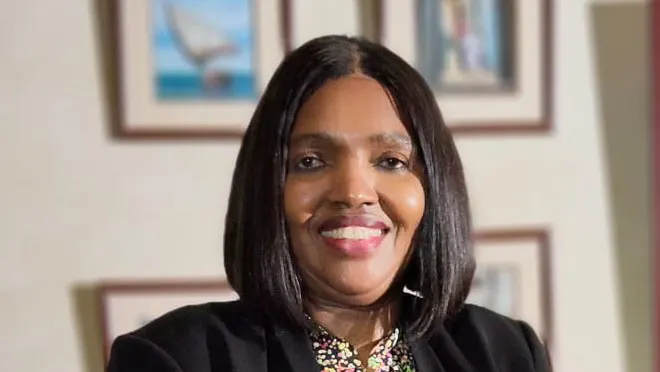
Tabitha Karanja is the Senator of Nakuru County in Kenya and the founder and former CEO of Keroche Breweries in Kenya. The company is the second largest alcoholic beverages company in Kenya and the primary locally-owned challenger to the East African Breweries Limited (EABL) which is controlled by British-owned Diageo.
She begins the interview by discussing her childhood as the eldest daughter. After completing her A-levels at high school, she started working as an accounting clerk with the Ministry of Tourism, and got married soon after. She joined her husband’s hardware business and while researching about manufacturing capabilities, she identified a gap in the Kenyan alcoholic beverages market. At the time only one company (EABL), in which the British alcoholic beverages company Guinness held a minority shareholding, dominated the market.
In 1997, Karanja and her husband sold the hardware business and started Keroche Breweries, producing and selling fortified wine through retail establishments like bars. The production volume grew rapidly from two hundred litres to a million litres in just six years. She then expanded into beer, conducting research and getting into a contract with an equipment manufacturer in Germany, and launching the Summit Lager in 2008. Having launched the beer, she decided to pursue a Bachelor’s degree in Business Administration.
Karanja wanted to expand production capacity further and received support from Barclays, a leading majority British-owned bank in Kenya, to launch a one million hectoliter brewery. She discusses how fortified wines were a safe and affordable alternative to cheap illicit drinks like Muratina, and Busaa. As Keroche grew rapidly, they overcame bureaucratic and legal hurdles for the firm’s production and licenses, created by EABL, which became fully owned by Britain’s Diageo (the successor to Guinness) in 2000.
In 2005, Keroche launched a vodka brand called Crescent, but in 2007-08 a new excise tax on fortified wines made them unaffordable for customers. At the time 80 per cent of the company’s revenues came from fortified wine. Keroche held EABL responsible for changed law and she noted their power in Kenya at that time. “They had monopolized the business for 80 years,” she noted, “and the people they had appointed as their distributors were people in the government. These are people – as ministers, even as presidents, their families were in the distribution network. So, the minute they wanted to fight a competitor, they would use the same government agencies to do that.”
However EABL’s non-malted beer, which received zero-tax, had become a suitable alternative to the fortified wine, and Keroche dropped fortified wines. Keroche’s also launched a ready to drink vodka- Vienna Ice- which provided cushion for sustainable revenue.
Karanja emphasises how EABL continued to create obstacles for Keroche. In October 2008, Keroche launched Summit Lager, its first beer brand, which represented a bold entry into the beer market which had long been dominated by EABL. Despite Summit Lager’s popularity as a natural-brewed beer without a hangover, legal battles caused by EABL caused delays in its delivery to bars. In addition to creating legal hurdles, Karanja argues that EABL also used unethical tactics, like paying bars to hide Keroche’s products until they expired. However, strong demand for Keroche’s products caused EABL’s tactics to fail.
Karanja also discusses the Keroche Foundation, launched in 2014, which extended support to young entrepreneurs and new businesses. Discussing her motivation, Karanja observes that “I thought I could only support the upcoming entrepreneurs by giving them a hand so that they don't struggle the way I've struggled.” The work of the Foundation was largely suspended during the COVID-19 pandemic, when Keroche Breweries faced financial challenges,, primarily due to government restrictions like the closure of all alcoholic beverage outlets and curfews. However, Karanja notes that the work of the Foundation is now being restored.
Karanja concludes the interview by saying that successful individuals should uplift others to give back to society. “You also need to ensure that you leave a mark that you also helped other people to come up” she notes.
It is just believing in yourself and pushing yourself, remaining focused, and doing what you want and what you enjoy, and you leave a legacy.
Additional Resources
Strength of a Woman :Tabitha Karanja, AprIL 24, 2012.
Jessica Ellis and Lillian Leposo, " Female beer boss who took on drinks giant,"
CNN , March 15, 2013.
Maina Waruru, " The female Kenyan brewer taking on a global drinks giant,"
BBC , May 4, 2015.
Dennis Musau, " ‘I want to protect businesses from harsh taxes’: Keroche CEO Tabitha Karanja on Nakuru Senatorial bid,"
Citizen Digital , December 19, 2021.
Julians Amboko, " Tabitha Karanja steps down as Keroche CEO,"
Business Daily , June 13, 2023.
Interview Citation Format
Interview with Senator Tabitha Karanja, interviewed by Ramon Casadesus-Masanell, Boston, Massachusetts, USA and Nairobi, Kenya, 12 June 2025, Creating Emerging Markets Oral History Collection, Baker Library Special Collections and Archives, Harvard Business School, http://www.hbs.edu/creating-emerging-markets/.
Video Clips by Topic and Full Length Video
- Play Video duration:1:34Tabitha Karanja on Government and Business
- Play Video duration:1:52Tabitha Karanja on Social Impact
- Play Video duration:3:20Tabitha Karanja on Start Up