Interview Summary
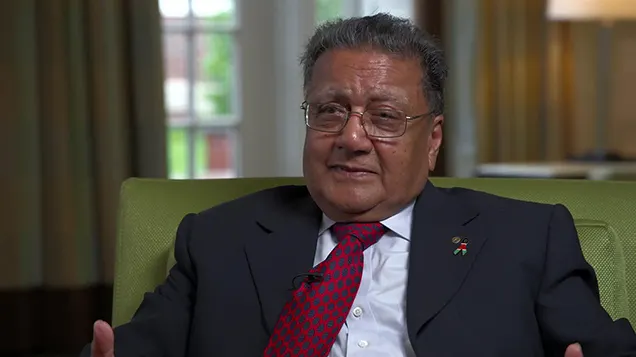
Manu Chandaria, chair and CEO of the Kenyan-based steel and aluminum group Comcraft, narrates the challenges of growing and managing a business which had originated when his father arrived as an Indian immigrant to Nairobi in 1915. A hundred years later Comcraft had more than $2 billion in annual revenues, employed over 30,000 people on three continents, and was the largest manufacturer of steel and aluminum products in Africa. Chandaria describes the stationing of family members internationally, innovative methods of accessing capital and acquiring talent, and the group’s strategies to navigate political turbulence in African countries. Chandaria also describes the family’s entrance into philanthropy and how his religious beliefs, as a follower of Jainism, affected the culture of the firm and his approach to management.
[O]ne principle that we adopted in our lifetime and with our children… we always told them that money’s here today; money may not be there tomorrow. A good set of principles and values that you have, those will remain with you for your lifetime.
Download Interview Transcript
Additional Resources
“Kenya's Comcraft Group Discussing Possible Share Offerings: Chairman,” Reuters, April 9, 2014
“Kenya’s Richest 25 Control Sh404 Billion,”
Daily Nation, February 20, 2014
“How Manu Chandaria Mastered the African Market,” Knowledge@Wharton, January 30, 2013
“ALD interview with Dr. Manu Chandaria,”Africa Leadership Dialogues, November 11, 2013
“Experiences of the Indian Diaspora in Africa,”
Forbes India, August 26, 2009
Video file of this interview available at Baker Library Historical Collections, histcollref+hbs.edu. Harvard ID holders can access the full-length video above.
Interview Citation Format
"Interview with Dr. Manu Chandaria, interviewed by Henry McGee, June 13, 2014, Creating Emerging Markets Project, Baker Library Historical Collections, Harvard Business School, http://www.hbs.edu/creating-emerging-markets/."