
Pay disputes—over wage cuts, pension contributions, owed bonuses, or nonpayment—have sparked some of China’s biggest worker protests in recent years. But when these workers win more pay, they’re likely to lose health and safety protections.
Factories facing wage-related worker activism improved wage compliance, but did so while making slower progress on meeting occupational health and safety standards, according to an analysis of workplace audits by Harvard Business School Professor Michael W. Toffel and his collaborators. This suggests that plants reallocated resources they spend to comply with workplace safeguards set by their customers, industry coalitions, or advocacy groups.
Chinese workers have been increasingly speaking out when factories violate pay regulations, the most common reason for labor unrest in the country. Their employers often comply to avoid costly work stoppages or government intervention.
However, progress on pay comes with hidden trade-offs, say Toffel and collaborators Yanhua Bird, a professor at Boston University’s Questrom School of Business, and Jodi L. Short, a professor at UC Law San Francisco.
“We're finding that this improvement in wage compliance is coming at the expense of improvement in occupational health and safety,” says Toffel, the Senator John Heinz Professor of Environmental Management. The researchers share their findings in the working paper “How Firms Respond to Worker Activism: Evidence from Global Supply Chains,” released in June 2025 and revised in March.
Better pay compliance comes at a cost
Many multinational companies, under pressure to ensure fair and humane working conditions, set codes of conduct for suppliers and hire outside auditors to monitor their compliance. These standards apply not only to pay, but to areas such as safety, discrimination, and child labor.
Factory owners, who must balance compliance costs against other operational demands, often prioritize the issues most salient to workers and auditors, such as meeting minimum wage and overtime pay requirements. While brands press for compliance, they’re also trying to keep costs down and shrink lead times, so they rarely scale back orders in response to health and safety violations, the authors write.
Using nearly 6,000 safety audits at more than 2,300 Chinese factories, the researchers evaluated whether scores moved up the zero-to-100 scale—indicating better adherence.
The team layered in data on nearly 1,900 protests across 114 cities from 2012-2015 from the China Labor Bulletin, and looked at how suppliers responded to instances of such unrest in their city. They also considered whether factories tied pay to output and how government-controlled labor unions shaped progress.
In cities with more wage-related worker activism:
Wage compliance rose. Each standard deviation increase in protest—equivalent to about 16,000 collective participants—led to a roughly 40% gain in the improvement of wage standard adherence.
Safety and health improvements took a backseat. The gap in progress on meeting wage and safety standards expanded by 3 points with each standard deviation of unrest.
The tradeoff between wage and safety compliance was more pronounced in unionized factories. The researchers hypothesized that union plants would be less likely to set aside safety requirements in favor of wages, but they found the opposite.
Safety improvements in pay-by-piece plants stalled more. Chinese factories that tie pay to production output exhibit less health and safety improvement than factories that pay hourly wages. They also respond to activism with a more pronounced tradeoff that improves wage compliance at the expense of occupational health and safety compliance.
With piece-rate pay, workers “don't want to stop. They don't want to cut corners. They just want to produce as many pieces as possible,” Bird says. “So that's another natural factor to consider, and we find, as expected, if factories are paying workers based on piece rate, this type of trade-off is worse.”
What can companies do?
Activism that leads to better pay might seem like a clear victory for workers, but it comes at a cost to workers. Suppliers reallocate enough resources to relieve scrutiny over activist workers’ wage concerns, but they significantly slow progress toward compliance with health and safety standards.
“There seems to be a transfer of attention and potentially resources from occupational health and safety to wages, and it's especially manifest in unionized shops,” Toffel says.
What do the findings mean for multinational companies sourcing goods from global supply chain factories? The researchers recommend that companies:
Embrace activism as a catalyst for wage progress
Worker unrest in a supplier’s city might pose risks, but such advocacy can bring suppliers closer to their buyers’ wage goals, Toffel says. The key is to look holistically, and not just at improved wage compliance.
“Don’t just look under the lamppost of wages, because even if wage conditions improve, you’re not done,” Toffel says. “It might lead to other priorities getting less attention. It’s nuanced.”
Explore audit results more closely
Managers should look more deeply at not only how suppliers pay their employees, but how well they protect them when they, say, handle corrosive chemicals or dangerous machinery.
“The audit score overall might be improving,” Toffel says. “But if you look at different domains, you will see different rates of improvement, and even some declines. For multinational managers, it’s important to look at the finer-grained audit report results and not just summary scores.”
Understand that codes can only go so far
Multinational organizations might assume that setting codes of conduct and following them up with audits will ensure fair and safe working conditions. But that is not necessarily the case.
“We show that suppliers actively manage compliance across labor domains in response to local pressures and internal constraints, highlighting limits to [multinational enterprise’s] ability to fully direct supplier behavior through codes and audits alone,” the authors write.
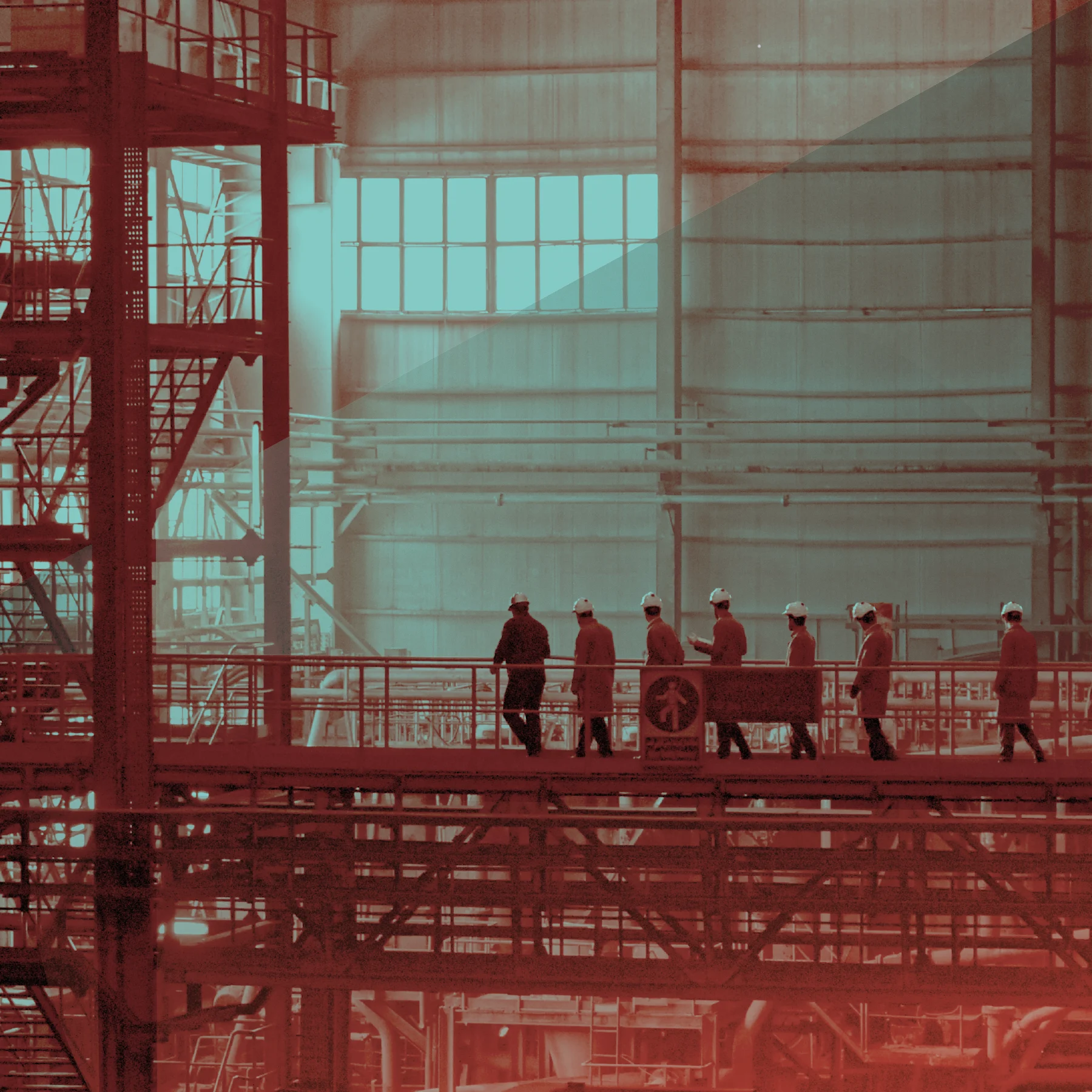
Illustration created by Ariana Cohen-Halberstam with photo from Unsplash/Armin Iranzad.