Boston Celtics Head Coach Joe Mazzulla isn’t afraid of challenging basketball orthodoxy, whether it’s by using videos of orcas hunting sea lions to impart a lesson to players or serving wine in the locker room after a tough loss.
Such contrarian habits and behaviors have helped the 37-year-old coach earn the highest regular-season winning percentage in NBA history, among coaches who have led at least 100 games. Under his leadership, the Celtics have made the last four NBA Playoffs, winning the championship in 2024.
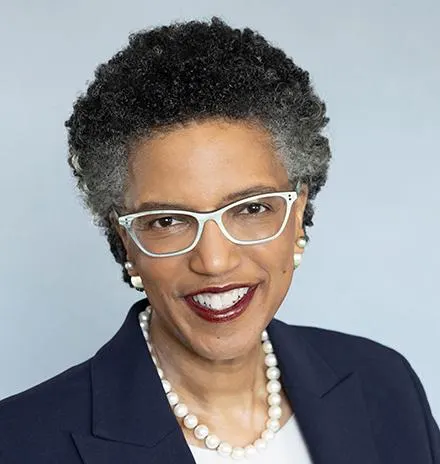
“I do need to say to you, and I mean this sincerely as the daughter of a man who is a 76ers fan, he impressed me,” says Harvard Business School Professor Linda A. Hill. “He's one of the greatest leaders I've ever seen.”
While a playoff loss to the 76ers ended the Celtics’ most recent season, Hill says that Mazzulla’s journey offers important lessons for any leader trying to build and manage high-performing teams under pressure. In a series of case studies, she traces his path from college basketball player to NBA coach to reveal what it takes to succeed in the highest levels of sports management and beyond.
She recruited one of her mentors, James I. Cash, the James E. Robinson Professor of Business Administration, Emeritus, to coauthor the series, along with Lydia Begag, an HBS research associate and Celtics fan.
Setting the right tone for the right time
The first case in the series opens with a pivotal moment: Game 4 of the 2024 NBA Finals. After the Celtics had won three games against the Dallas Mavericks, Mazzulla found himself at a crossroads as he contemplated his pre-game message to the team:
Should he rally them with an aggressive “go for the kill” mindset, as was his first instinct?
Or should he choose language that is more aligned with the Celtics’ “joyous intensity” culture?
For most of that season, Mazzulla emphasized “joyous intensity,” encouraging his players to embrace the fun of chasing a championship. The closely knit team played loose, confident, and strong, entering into the playoffs with the best regular season win-loss record in the league. But this moment carried a lot of weight: “We have to win the next one. If we lose the next game, then we give [the other team] life,” he remembered thinking, according to the case.
“When leading in high-pressure situations, your words, your rhetoric, really matter,” notes Hill, the Wallace Brett Donham Professor of Business Administration. As head coach, Mazzulla knew that his messaging could influence the franchise’s performance.
Seek opportunities in setbacks
Mazzulla, naturally athletic, grew up in Rhode Island immersed in the sport. His father coached high school basketball and they frequently watched professional games in “Title Town,” local slang for Boston. He went on to play for West Virginia University.
An injury during his junior year forced Mazzulla to reconsider his future. He started attending coaching meetings with his coach, Bob Huggins. Mazzulla discovered he enjoyed applying a “30,000-foot view” to games—jotting down observations to consider later—and having “deeper conversations and relationships with his teammates,” he says in the case.
Mazzulla realized the critical role of coaches, one that goes beyond winning. “Every single coach I had once I started playing organized sports [was] about the right things—the relationships, the details, the fundamentals.”
Hill says Mazzulla turned what could have been a personal defeat into an opportunity to redirect his path, grow as a person, and mentor the next generation of players: “He thought intentionally and carefully, at a point in his life than many wouldn’t have, about what he needed to become an effective leader over the course of his career,” she says.
‘Managing yourself’ first
At West Virginia University, Mazzulla studied Spanish, business, and sports psychology, skills that later would help him as a coach: “You’re going to need to know psychologically what makes yourself and others tick.”
As a 23-year-old first-time assistant coach at Glenville State University, Mazzulla attended a recruiting event dressed like a former player. A coach told him to “‘lose the earrings and tuck your polo in.’”
He recognized that he needed to find his own coaching playbook and professional approach: “I needed to develop my own coaching identity and shake this former player identity,” he says in the case.
Mazzulla learned that leaders cast a shadow, Hill notes. “The first imperative is managing yourself,” she says. “Leadership is always about using yourself as an instrument to get things done.”
With his 2014 marriage to Camai Mazzulla, faith and family became rocks he leans on. The couple added Mazzulla’s dream of becoming an NBA head coach to their “prayer board”—a goal they would pursue together.
Prioritizing learning experiences
Mazzulla moved into the NBA Gatorade League as an assistant coach for the Maine Red Claws in 2016. Still, he kept interviewing for other roles, looking for experiences that could help him sharpen his vision and talents, even if they didn’t pay the most.
Brad Stevens, then head coach of the Celtics, offered him an assistant “behind the bench” position in 2019, focusing on the team’s defense. To earn players’ trust, he knew he would have to understand their psyche and the city’s dynamics.
“I learned the art of listening and asking the right questions,” Mazzulla says in the case. “I always was willing to break down the barrier between coach and player.”
He interviewed for the head coach job in 2021. Although he wasn’t ready for the role yet, he learned how to prepare for the real opportunity when it came the following year. “It was a gift that [Stevens] gave me,” Mazzulla says.
“You see how curious he is and how he seeks out opportunities to grow and get feedback, developing himself in the process,” Hill says.
Navigating transitions with humility
The Celtics named Mazzulla interim head coach in September 2022, giving him four days to process and prepare for a move that put him above more experienced colleagues.
“It’s not just a case about basketball,” Hill says. “It’s about a high-profile leadership transition, where a high potential is being asked to step into a publicly scrutinized leadership role, with no real prep time, guaranteed authority, or grace period.”
Applying his emotional intelligence, Mazzulla reached out to talk one-on-one with key stakeholders, starting with the head assistant coach many viewed as “next in line.” He told them that he welcomed opposing viewpoints, winning their support.
Mazzulla approached his team with directness and humility, saying “I’ve watched you fight, cry, succeed, fail, and grow as individuals.” He also balanced using shared language and catering to individual communication styles.
“The way he talks and implements with Derrick [White] is different than the way he talks and implements with [Jayson Tatum] or Jaylen Brown,” says Kara Keena, the Celtics’ senior director of team operations, in the case.
“This was truly a stretch assignment,” Hill says. “Joe stepping into the role and understanding his context first and foremost helped build trust and credibility. Two reasons high-potential leaders fail is because they can’t build these teams and they can’t manage these transitions.”
Mazzulla reframed his first season as interim head coach as an experiment, one he intended to give his all despite the odds against him. The team surpassed expectations during the regular season and playoffs, but fell short in the Eastern Conference Finals (the semifinal round before the NBA Finals).
Empowering the individuals on a team
The following year, Mazzulla became permanent head coach and felt increasingly comfortable leading on his terms. “The biggest thing that worked for me is just being unorthodox, not getting bogged down by how something is supposed to go, or what coaching should look like,” he says in the case.
While working his players hard and making his expectations clear, he also gave the players autonomy, even letting the top players recommend a game’s starting lineup. Mazzulla chose not to name a team captain to avoid playing favorites and “immediately eliminate the empowerment of someone else to lead.”
“There is a lot of pressure on these stars. He balances understanding each individual and stepping into their shoes,” Hill says. “At the same time, he works on building a culture to which he wants them all to feel accountable.”
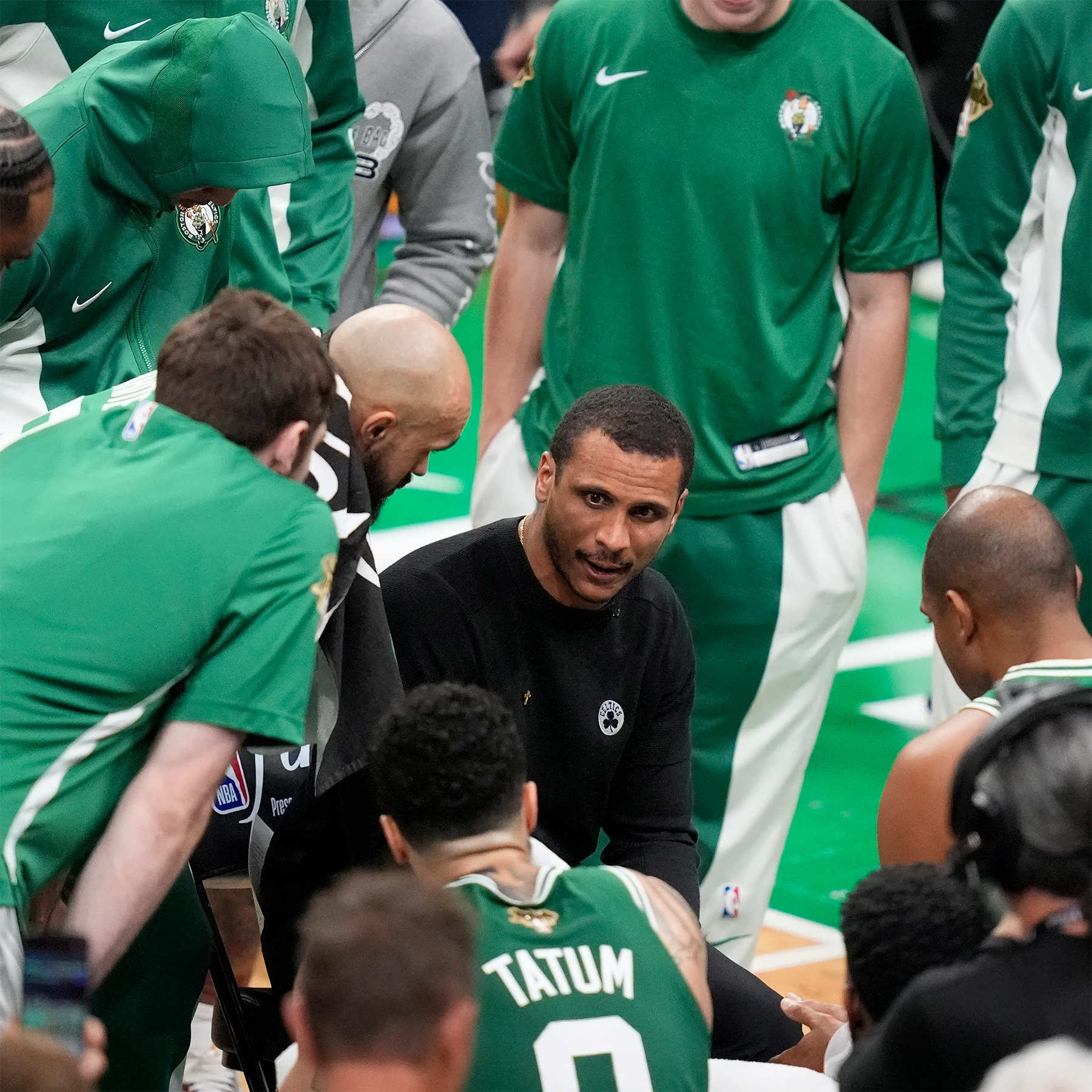
Mazzulla let his players know they were safe to share their vulnerabilities. He asked players what made them comfortable or anxious, and adjusted his staff’s communication style accordingly. He also wasn’t afraid to wrap his arms around players—and encouraged them to do the same during huddles.
“I’m going to wrap my arms around you, but I’m also going to hold you to a certain standard,” as one Celtics executive says in the case. Mazzulla likes to say that “love is at the center of everything.”
Owning mistakes, even when the stakes are high
Back in the locker room before Game 4 of the 2024 NBA Finals, Mazzulla decided to shift his tone away from “joyous intensity” and tell his players to “go for the kill.” “Don’t relax,” he says in the case. “We still got to play one more game.”
When the players stepped onto the Dallas court, they lacked their characteristic enthusiasm. The easy rhythm that had defined their season disappeared, leading to a 122-84 loss. Mazzulla regretted his choice; the team was playing with “too much pressure on its back.” “I had made a mistake. I took the joy away from winning,” Mazzulla recalls.
After botching his messaging to the team in that fourth game, Mazzulla quickly took accountability and shifted gears. He lined up all the team members and reminded each person what they brought to the group and what the team needed from them. He finished by saying: “We are at war, but you have to find the joy in it. It’s OK to smile during war.”
The Celtics won Game 5, bringing the 18th championship title banner to Boston. At 35, Mazzulla was now the youngest head coach in at least 48 years to win the NBA Finals, since Bill Russell.
Redefining greatness—on one’s own terms
Mazzulla is “somewhat of a Renaissance person,” Hill says. “He’s a scholar of many different disciplines.” To stay grounded, he seeks out activities unrelated to basketball, like Brazilian jiu-jitsu and leisure reading. He also meets with his priest and practices mindfulness, giving him opportunities to reflect on his leadership.
After all: “Talent wins. Character repeats,” Hill recalls him saying after winning the 2024 NBA Finals. “The way we handle these next three years is going to be the true test of who we are as competitors.”
Photo: AP Photo/Charles Krupa