Trading strategies of the vast majority of US asset managers are so predictable that artificial intelligence models can easily mimic them, raising questions about how soon they may be replaced by AI.
Some 71% of mutual fund managers’ directions—whether to buy, sell, or hold—in a given quarter can be anticipated without the agent executing a single trade, according to research by Harvard Business School Professor Lauren H. Cohen. The most predictable managers underperformed their peers, while managers who made more novel choices outpaced them.
The $54 trillion asset-management industry is at a pivot point as intensifying cost pressures and the commoditization of certain actively managed funds meet the accelerating development of AI. Cohen’s findings may support investment firms' initiatives to replace some tasks now performed by fund managers with AI agents.
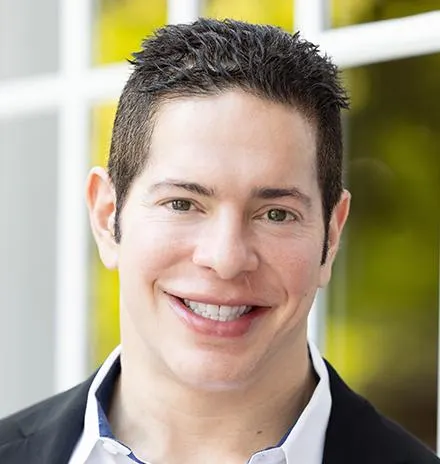
“It turns out even though prices aren't predictable, human behavior is,” says Cohen, the L.E. Simmons Professor of Business Administration. “What we know from behavioral economics and really psychology and judgment decision-making more broadly is that a lot of what we do every day is pretty much what we did yesterday.”
Cohen shares the findings in the February working paper, “Mimicking Finance.” He coauthored the paper with Yiwen Lu, a doctoral student at the University of Pennsylvania’s Wharton School, and Quoc H. Nguyen, a professor at DePaul University’s Driehaus College of Business.
Experienced managers are most predictable
Cohen and his collaborators say this is the first study to consider whether AI can learn the work of money managers. The team built a model using several databases, including US equity fund holdings from Morningstar Direct from 1990 to 2023, as well as economic data from the Federal Reserve. Mutual funds in the study needed to be at least seven years old and have at least 10 holdings.
The team found that managers' moves were predictable across all fund categories, peaking for mid-cap blend funds at 75%, on average. They also found:
Seasoned managers were significantly easier to predict than less experienced managers.
Older and larger funds were more predictable than newer and smaller ones.
Managers responsible for multiple funds had significantly higher trading predictability than their more focused colleagues.
Still room for human innovation
The news is not all bad for natural intelligence. Fund managers whose strategies were shown to be less predictable consistently outperformed peers, suggesting an essential role remains for human creativity. To compare:
The least-predictable managers generated a risk-adjusted return of 0.14% in their first quarter after trading, expanding to 0.4% after four quarters.
The most-predictable managers lost 0.09% in the first quarter, which widened to 0.42%.
“If I'm 90% predictable, and you're only 50% predictable, then on average, you outperform me,” Cohen says. That means that “machines can't learn you, that you're innovative in a way that machines can't predict.”
Adjusting these returns for known risk-determinants had nearly no effect on these spreads.
“What's kind of neat about this is that it looks like you're outperforming in ways that are unrelated to risk,” Cohen says. “It's kind of pure outperformance. It's not that you're taking more risk, they're just better bets.”
Staying competitive in the AI age
Cohen said the findings have broad implications for asset management, which employs more than 1.1 million people in the US, according to the Investment Company Institute. Asset management is known for its high wages and relative stability, compared with other parts of finance. To stay competitive, firms could:
Rethink compensation, hiring, and manager tenure
AI’s potential “should change equilibrium wages [for money managers],” Cohen says. “That should change even the amount of work, and the number of laborers. And it should change the general labor equilibrium of that market on both the worker side and on the firm side.”
Consider investing more counterintuitively
Given the power of AI to replicate trade decisions, managers “could take measures to obfuscate and change behavior to reduce the ability of these tools to extract predictable behaviors,” the paper says.
Cohen says that future research could probe whether AI can mimic the work of other finance professions, including sell-side analysts right up to firm-level decision-makers, like CEOs.
“Like in any job, if we have new tools that come along that can do a lot of what I do in a lower cost way and essentially, just as well, that should change what my job looks like,” he says.
Image created by Ariana Cohen-Halberstam with asset from Adobe Stock/ImageFlow.
Have feedback for us?
Mimicking Finance
Cohen, Lauren, Yiwen Lu, and Quoc Nguyen. "Mimicking Finance." NBER Working Paper Series, No. 34849, February 2026.