It’s no secret that many organizations—corporations, government agencies, universities, and more—are shrinking, reshaping, and in some cases, dismantling the diversity, equity, and inclusion efforts they spent years nurturing.
Some leaders have questioned the purpose and effectiveness of DEI programs, while others are probing the legal boundaries of such initiatives. Some of these efforts are continuing more privately.
The question guiding my research is related yet distinct: How do employees perceive and use these initiatives? To find out, I studied a longstanding but often underused DEI practice that continues to exist at many organizations: employee resource groups (ERGs).
Similar to affinity groups, ERGs began as a way to foster community among employees with shared experiences and identities. While many organizations sponsor their ERGs, these groups are primarily employee-driven.
At a time when overt conversations about identity in the workplace might seem risky, ERGs can provide critical support and help retain talent—benefiting companies as much as employees, I would argue. The challenge for employees and organizations now is to help them thrive.
Why ERGs still matter
If you’re not familiar with ERGs, it’s worth challenging a few potential misconceptions. Some might assume that ERGs are exclusive, but that is not the case. In fact:
Identity-based groups are not monolithic. Some of the most common ERGs convene women, the LGBTQ+ community, and people of color, but ERGs can be convened for veterans, caregivers, and people in the same stage in their career.
An ERG can be for everyone. These groups are not limited to those who directly identify with the group’s social identity, but may also welcome allies and others interested in learning, supporting, or celebrating colleagues who hold a certain marginalized identity.
ERGs often emerge from acute needs experienced by employees. Many ERGs are completely voluntary. After all, you do not need formal permission to recognize someone’s humanity.
Why would a company want to support its ERGs, especially at a time when such efforts are under scrutiny? At times of economic uncertainty, research has shown that ERGs can boost morale.
However, partnerships are complicated. In my research with numerous ERGs, I found that four recurring tensions shape whether ERGs can fulfill their promise: the group’s formality, audience, identities, and resilience. I refer to these tensions as the FAIR model.
Understanding the FAIR model can provide organizational leaders with deeper insight into the challenges and possibilities facing ERGs—and, thereby, better equip companies to support employees.
Formality: Balancing formal and informal activities
ERGs often struggle with how “official” the group should be. The formality of the group involves two main risks:
Overemphasizing formal structures. Some groups wait for permission before every move or focus exclusively on highly visible events. While this approach can be effective in securing resources and legitimacy, it risks missing the everyday needs of members at the expense of waiting for formal approval prior to addressing ERG group members’ concerns.
Relying only on informal connection. Informal connection—whether private chats, casual lunches, or after-work mixers—can create safety and belonging, but may fail to spark structural change. While this focus on informal connection may help ERG members feel better, organizational leadership may be less aware of the needs of ERG members due to the informal nature of this approach.
One Black woman described how a colleague invited her to a private ERG chatroom just for Black employees that was not recognized by the organization:
“This chatroom was known throughout the company as a safe space for us to have community and talk to each other the way we like to talk to each other.”
This illustrates the power of informality in fostering safety, while also showing how invisible these spaces can be to organizational leadership if they’re not paired with formal recognition. The private spaces can serve as a space of healing and support, providing ERG members with a base level of emotional safety that allows them to engage with the broader organization more productively. Accordingly, the most effective ERGs balance the safety of informal activities—often at very little or no cost to organizations—with formal activities that engage the broader organization.
Audience: Serving members without losing sight of others
Another tension arises around audiences, which encapsulates the various stakeholders for ERGs. Audience management requires balancing two complementary and sometimes conflicting tasks:
Centering members. ERGs must prioritize the needs and growth of their own community.
Engaging others. Allies, executives, and broader stakeholders also expect attention and connection.
A Black ERG leader explained how his group successfully bridged these audiences:
“We’re literally planning a professional development course where we partner lower-level employees with upper-level employees so they can have transparency into what it takes to ascend this ladder.”
This example highlights both components: It centered members by supporting career growth, while also engaging executives by aligning the program with leadership development goals.
Identities: Recognizing variation within groups
Organizations often pressure ERGs to present a unified front. With that in mind, identity work must contend with two primary challenges:
Intersectionality. Treating identity groups as monolithic erases the unique experiences of members at the intersections of race, gender, and other identities. One Black woman in tech made this clear:
“There are two things immediately apparent the moment I walk through the door: I’m Black, I’m a woman, and this is a tech world.”
Her words show the lived reality of intersectionality—navigating race and gender simultaneously—that should be accounted for within ERGs.
Variation within groups. ERGs often encompass diverse subgroups. An Asian man reflected on this challenge:
“The Asian ERG felt really fractured. People were identifying as Vietnamese, Filipino, and more—no common identity to rally around.”
His account underscores how variation within groups can fracture communities if differences aren’t intentionally addressed.
Coalitions grow stronger when ERGs embrace, rather than suppress, both intersectional identities and internal variation.
Resilience: Sustaining advocacy without burning out
Even the most committed ERG leaders can face challenges that threaten their longevity. Resilience has two critical components:
Managing burnout. Passion for ERG-related work can fade when the demands of advocacy work pile on top of demanding job responsibilities. ERGs must pace their efforts, share responsibility, and have clear succession plans. Co-leaders, boards with clearly defined roles, and leadership teams that distribute work are essential for long-term sustainability.
Coming back from conflict. Disagreements or oversights can fracture groups if they’re not addressed. An Asian woman recalled a cultural event where “people kept suggesting East Asian–focused menu items, and no one was thinking about South Asians … Finally, someone said, ‘I’m just going to have my [family member] come in and cook.’ It ended up being a really positive experience.”
This shows how acknowledging potential conflict or discomfort among members directly can transform exclusion into an opportunity for inclusion and renewal.
Resilience means both protecting against burnout and turning conflict into growth. Without both, ERGs struggle to sustain their impact.
The value of ERGs now
Navigating formality, audience, identities, and resilience is no easy task. When ERGs manage the four tensions in tandem, they create value for both employees and the organization at large, revealing multiple truths:
To sustain advocacy and create change, ERG leaders must take care of themselves and their members.
ERGs remain one of the most direct ways employees and organizational leaders can work together to build belonging within organizations. The impact of ERGs depends not only on whether organizations allow them to exist, but on how they are nurtured, supported, and balanced by ERG members and organizational leadership alike.
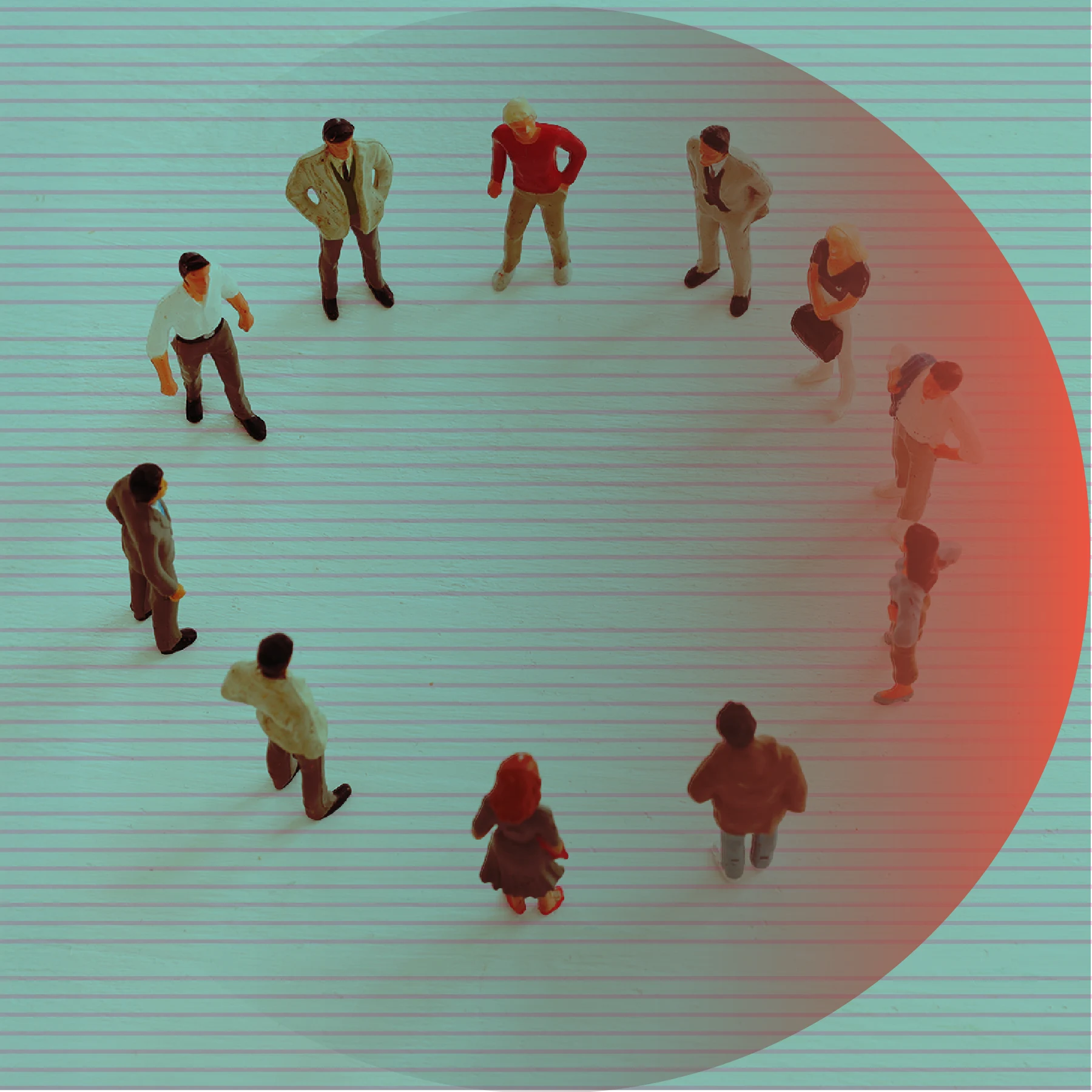
Image created with asset from AdobeStock/tomertu