
Finding a date today is as simple as swiping right on Bumble or Tinder. Too busy to date? No problem: ChatGPT can mimic small talk. Tired of messy relationships? Some people are opting to marry lifelike dolls.
Harvard Business School Professor Debora L. Spar says that technology is rewriting how people connect—and whether they form intimate relationships at all. US marriage rates fell to 6.2 per 1,000 people in 2022 from 8.5 in 1960. And birth rates dropped by half to 11 live births per 1,000 people during the same period. Even sex isn’t as in vogue today, with more people going sexless and millennials reporting fewer sexual partners than their parents and grandparents.
For business leaders, these changes raise a deeper question: In a world where technology makes connection effortless but commitment elusive, what’s the real value of compatibility, and who will profit from it? Industries once built around traditional family structures—from housing to retail—are being forced to adapt.
Spar, the Jaime and Josefina Chua Tiampo Professor of Business Administration, traces the history of marriage—beginning with its unromantic roots as a way to secure land and labor—in the article “Does Marriage Have a Future?” Spar coauthored the paper with HBS research associate Aryanna Garber. The research was published in the summer issue of the New Atlantis: A Journal of Technology & Society.
We recently talked to Spar about why she’s optimistic about marriage and how technology has—and hasn’t—changed business and society. Here’s what she said, lightly edited for clarity and length.
1. Marriage still has a role, but a different one
“The fundamental argument of the piece is that marriage no longer has to play the role that it once did. For centuries, marriage was the dominant social structure that kept societies together: It was the way poor people eked out a subsistence. It was the way rich people cemented inheritance, property, power. Marriage played a vital social role that had nothing whatsoever to do with love.
We don’t need marriage to play that role anymore. Women don’t need men to provide their livelihoods. Men don’t need wives to have sex. We don’t need marriage in those functional ways anymore—so, really, the only reason to get married is for love, which is pretty optimistic.”
2. Married people are happier and healthier
“People who are married, particularly men who are married, have longer, happier, healthier lives, whether they’re married to a woman or a man. I think that’s important.
There’s a parallel development that people, particularly men, are not finding friends. They’re not growing up with social groups that they stay close to over the course of their lives. Marriage alone won’t solve those problems. It’s part of a broader set of issues about why our social fabric is fraying.
My advice: Leave the computer alone. Get off your phone. Don’t rely on dating apps, which are becoming increasingly problematic. You actually need to get out there and meet real people. Whether or not you marry one of them is in some ways less important than building those social connections.”
3. Being able to commit is good for everyone
“I’m going to sound like a Hallmark card here, but love isn’t easy, particularly love over an extended period of time. In earlier generations, because expectations were lower, people had developed the muscle to ride through the bad times. I think that’s a muscle that we’re losing today.
Trace it to technology. If you’ve grown up swiping left or swiping right, it’s much harder to build that muscle of: How do you hang in there with one person who hopefully is the right person and figure out how to build something that works?”
4. Algorithms won’t replace authentic connection
“I think businesses now run the risk of overinvesting in technology, in thinking that you can build chatbots that will replace love. Are some people going to marry chatbots or fall in love with chatbots? Yes. But my prediction is that’s actually a pretty small, fringy part of society.
What I would advise businesspeople to do is realize that, even as we hurtle into this new world of AI, people are still going to fall in love. People are still going to need each other. People are still going to want families and children and sex and all these very old-fashioned things.
If you just follow the basic economics, the things that are scarcer are more valuable. I was talking recently with a human matchmaker who will charge up to a million dollars. She realized that if people were given a choice, they would rather go through the process of finding someone who’s really right for them. Algorithms will sometimes do that, but not always.”
5. In-person interaction is in demand
“There’s clearly a future for [dating apps]. But I think what we’re seeing now is that their underlying business model has put them at odds with their customers. They’re in the business of keeping people on the apps, and yet success in dating actually means getting off the apps.
Look at the surge in board game and trivia nights at bars, running clubs, climbing gyms. These are all businesses that have invested in physical community, and that’s where I would go.
Increasingly, businesses will and should realize the virtues of creating human connection in an increasingly digital ecosystem. It’s less about marriage. Think about sporting venues or concert venues. People will pay an absurd amount of money to go to a sporting event that they can watch equally well, probably better, on their very inexpensive flat-screen TV at home.
What are they paying for? They’re paying for the human interaction. I think that is only going to become a more valuable business over time.”
6. Even breakthroughs need enduring business models
“I’ve just come back from Japan, which leads the world in assistive robots, and particularly robots to help with the elderly. I was fascinated to see the extent to which the business models don’t work. I’m guilty of getting titillated by: ‘Ooh, weird! A robot taking care of my mother!’
It turns out these robots are pretty good, but they’re good at the level of a cat—and commercially, they can’t compete with a cat. They just don’t make economic sense. Interestingly, when we’re looking at these breakthrough technologies, we get so excited by the bells-and-whistles aspects that we lose the business model. And that’s where I think that the dating apps have lost some of that sheen.
In the early years of Tinder, there was this titillation: ‘Oh my God. You’re swiping for sex.’ Middle-aged people like me were like: ‘Oh my gosh, what is happening?’ And it turns out, yes, there was some swiping for sex. But, at the end of the day, the business model just hasn’t proven to be all that robust.”
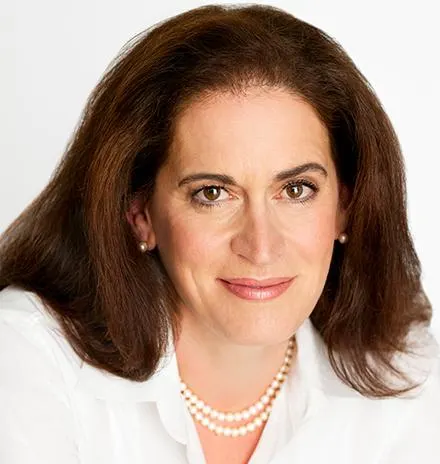
Photo: HBS
Have feedback for us?
Does Marriage Have a Future?
Spar, Debora L., and Aryanna Garber. "Does Marriage Have a Future?" New Atlantis: A Journal of Technology & Society 81 (Summer 2025): 20–33.
