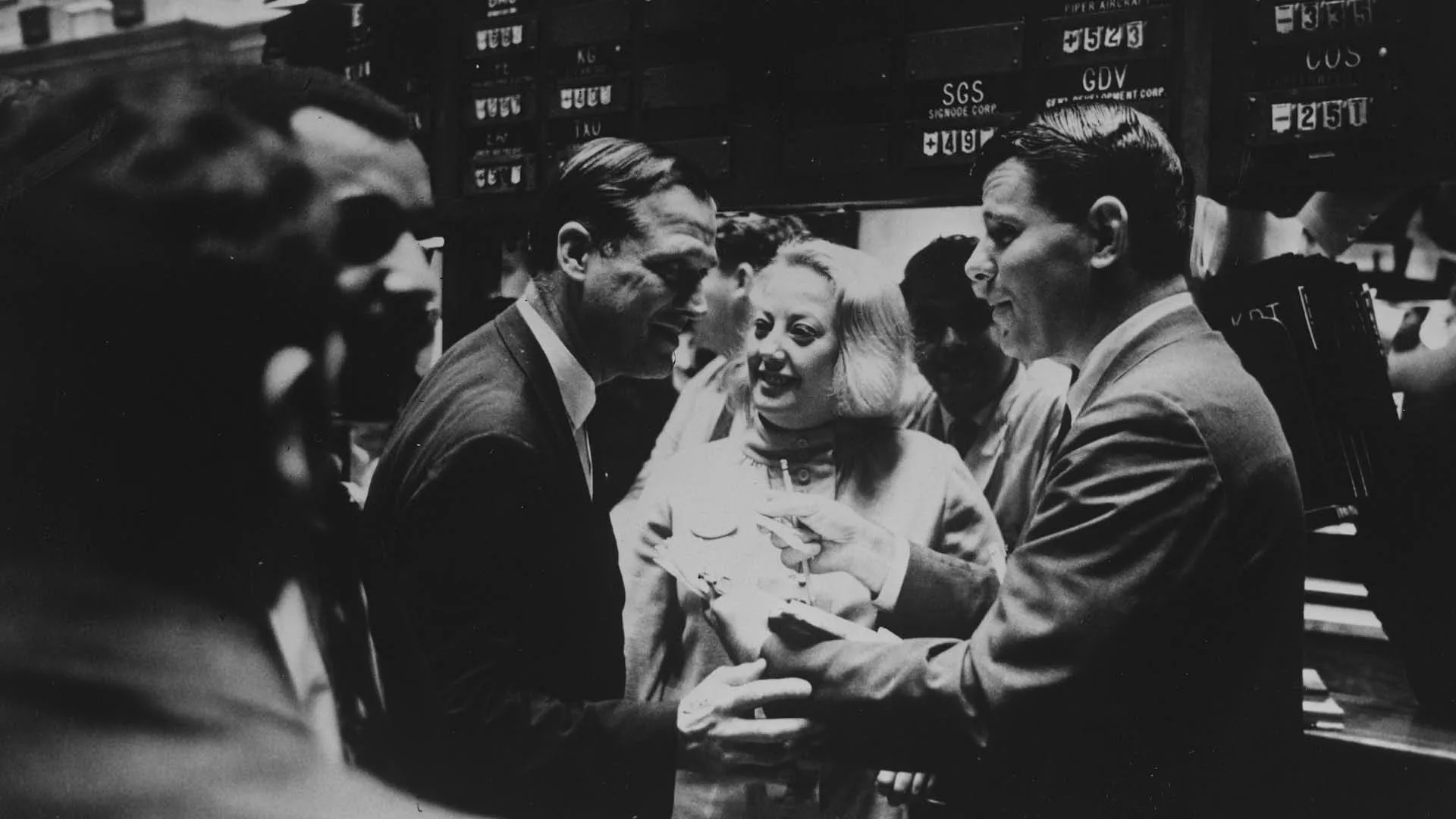
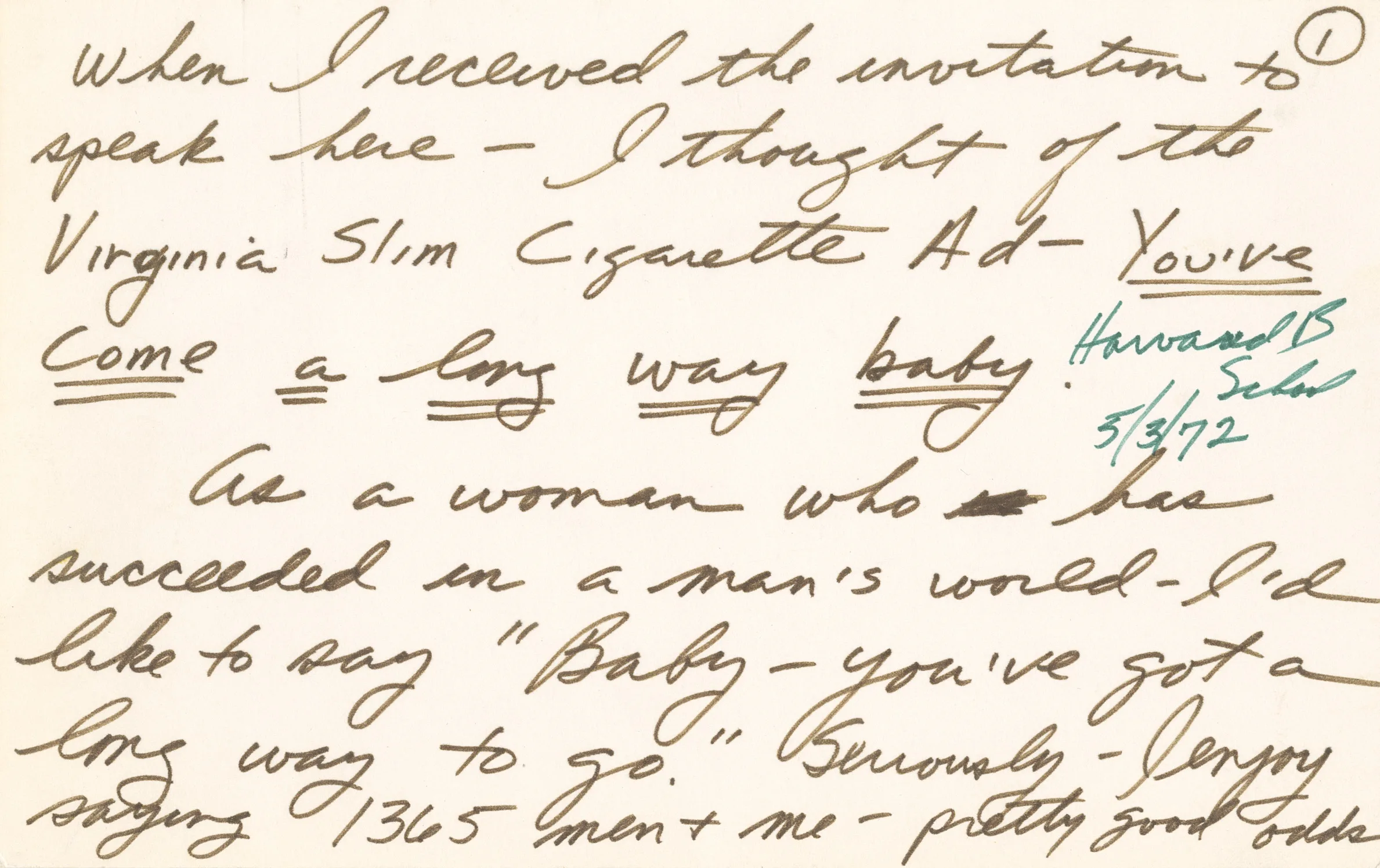
Muriel Siebert lacked the usual contacts or credentials valued on Wall Street. She liked to say that she arrived in New York City in 1954 with a used Studebaker and $500. Siebert, originally from Cleveland, Ohio, did have strong math skills, courage, and a sister who let her sleep on her sofa while she looked for work.
A year before moving to the city, while visiting her sister, Siebert had toured the New York Stock Exchange (NYSE): "What I saw as I looked down from the visitors’ gallery was a sea of men in dark suits [...] But after absorbing all that fierce energy, I turned to my friends and said, 'Now, this is exciting,'" she recalled in her autobiography.
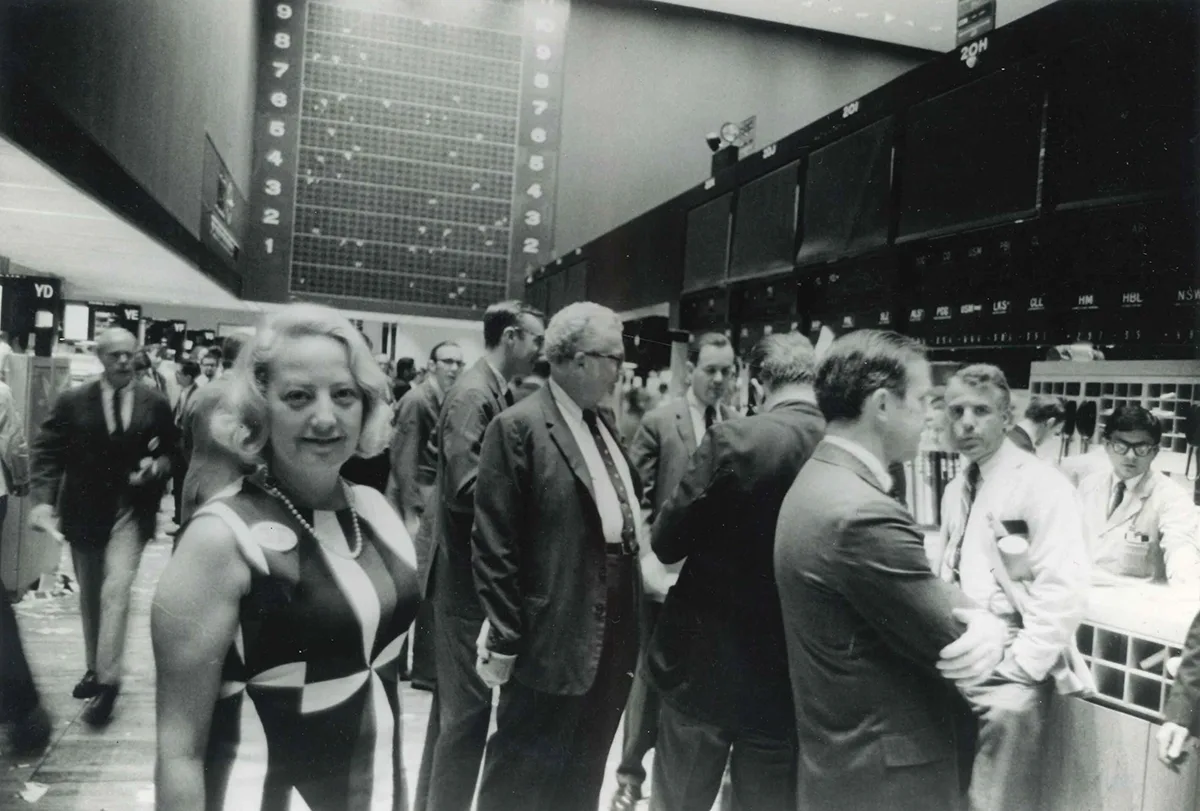
Muriel Siebert at the New York Stock Exchange, 1960s. Muriel Siebert Collection.
About a decade later, in 1967, Siebert became the first woman to hold a seat at the NYSE and the first to own and operate a brokerage firm there. She was also the first woman appointed to the powerful position of superintendent of banks for the State of New York.
In 2019, the Muriel Siebert Foundation donated her archive to Baker Library, including calendars, business reports, photos, and articles. An exhibit at Harvard Business School’s library, “Muriel Siebert: Redefining Power and Possibility on Wall Street,” features key items from the collection. These are five lessons we took from her extraordinary journey as a business leader who carved her own path to success.
1. Persistence pays off
After being rejected by the United Nations and Merrill Lynch, Muriel Siebert found a job at Bache & Co., a smaller brokerage firm. She was hired as a trainee researcher and later promoted to analyst —one of only three women in that role. Her salary doubled in a couple of years, but it was still lower than that of her male colleagues. She moved to Shields & Co. and became a senior securities analyst and went on to Stearns & Co. and other top firms, where she was became a partner.
Still, she hadn’t achieved equal pay. When she asked a client for advice on which firm she could join to earn the same as her male colleagues, he replied: “Don’t be ridiculous, you won’t. Buy a seat. Work for yourself.”
Siebert asked nine members to sponsor her, but all refused. Eventually, two former colleagues agreed to support her. The seat cost $445,000. On December 29, 1967, Siebert became the “First Lady Member of the New York Stock Exchange,” according to an ad announcing her membership.
2. Challenges fueled her determination
On top of being paid less, Siebert faced many daily challenges: when she attended a board meeting at the men’s Union League Club, she was not allowed to use the elevator. There was also no women’s restroom at the NYSE Luncheon Club. After her experiences, Siebert founded and participated in organizations that supported women in business, like the Women’s Forum and the Committee of 200. She also testified in support of a bill that banned business activities in clubs that excluded women.
“Mentors for women didn’t exist when I started on Wall Street,” Siebert wrote. “It makes you a feminist when you’re making $150 a week and the man sitting next to you is making $300,” she later said in a 1982 interview with Albany Times Union.
By the numbers
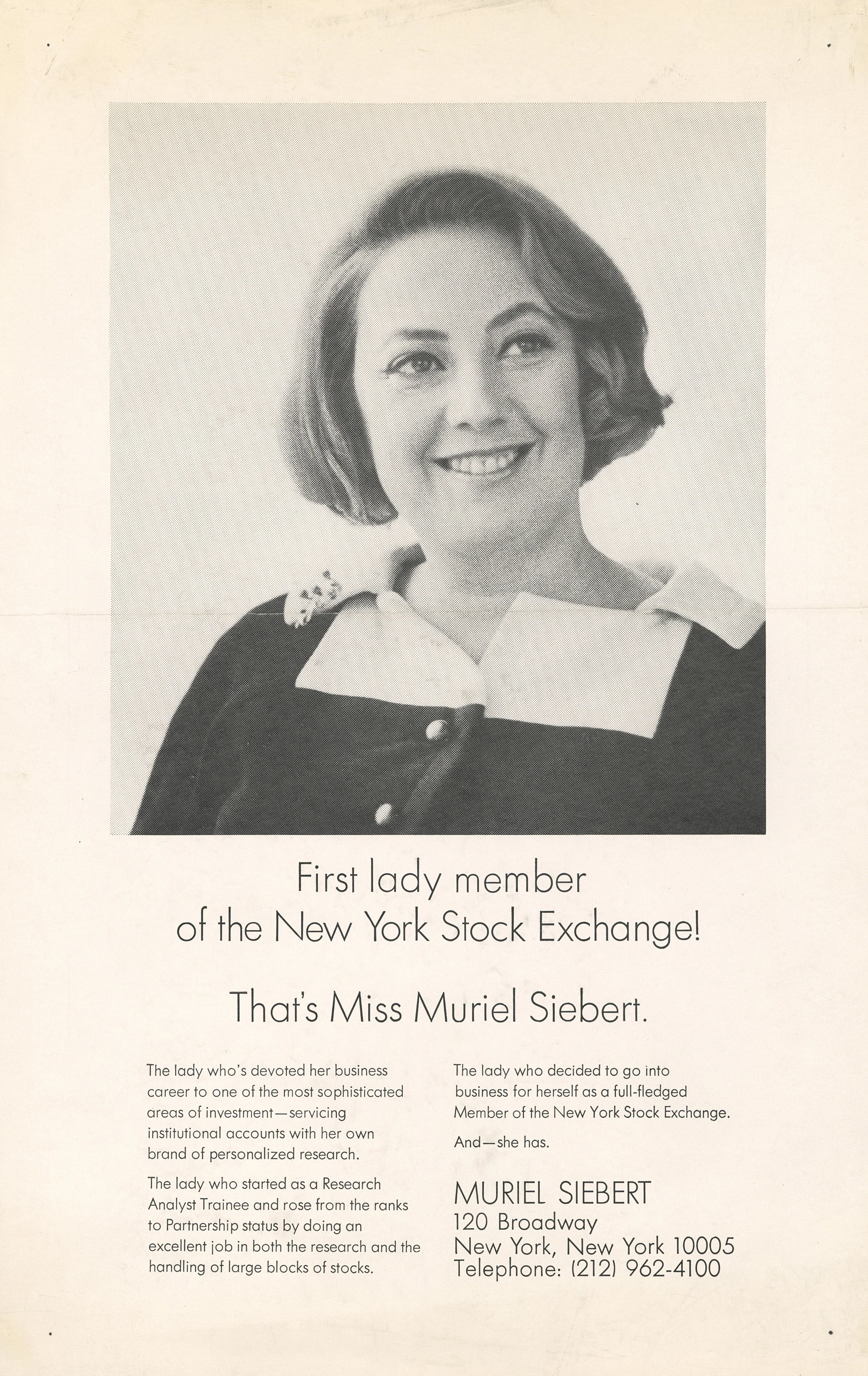
“First Lady Member of the New York Stock Exchange!” Advertisement, Muriel Siebert.
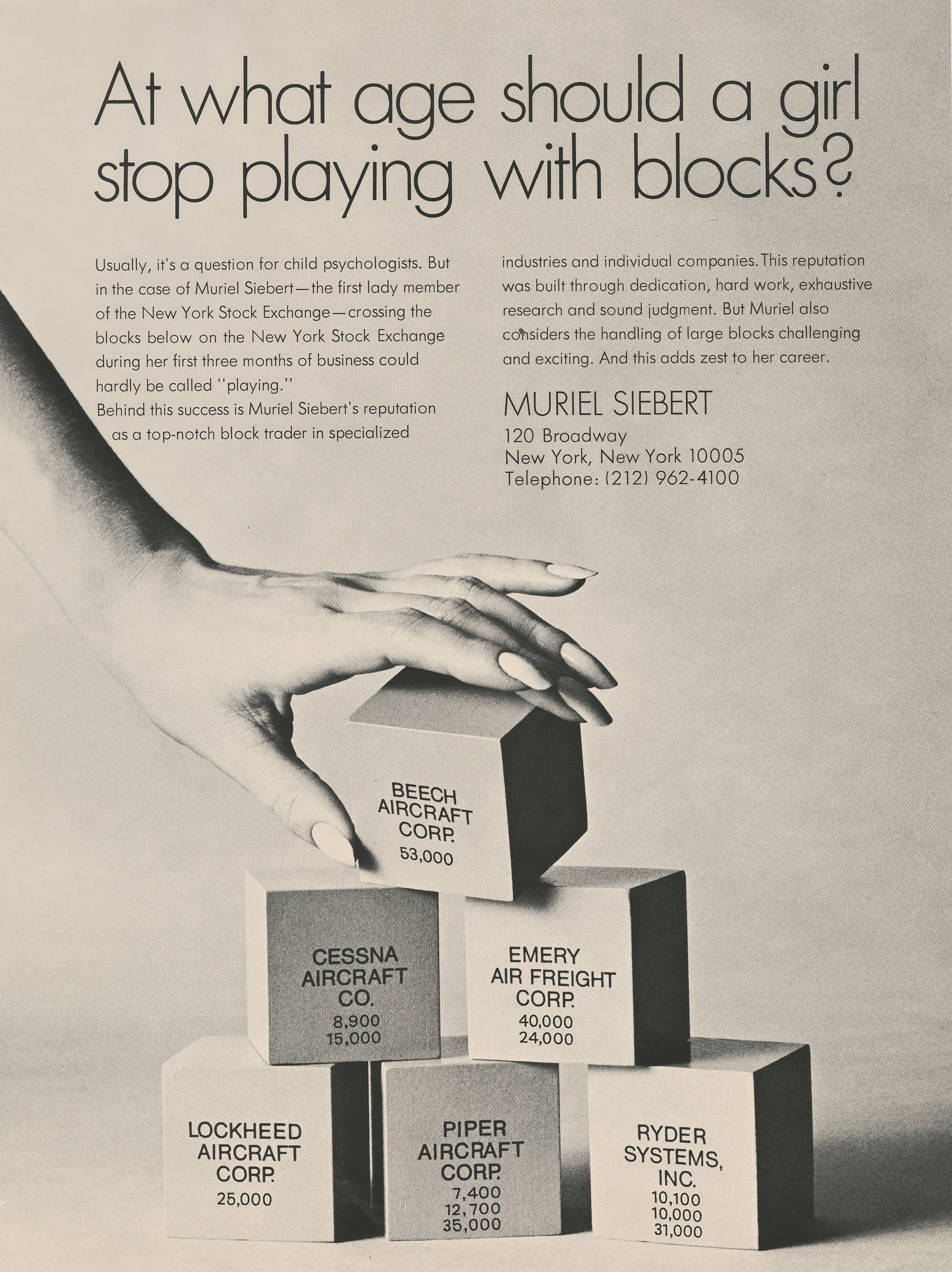
"At What Age Should a Girl Stop Playing with Blocks?" Advertisement, 1968, Muriel Siebert.
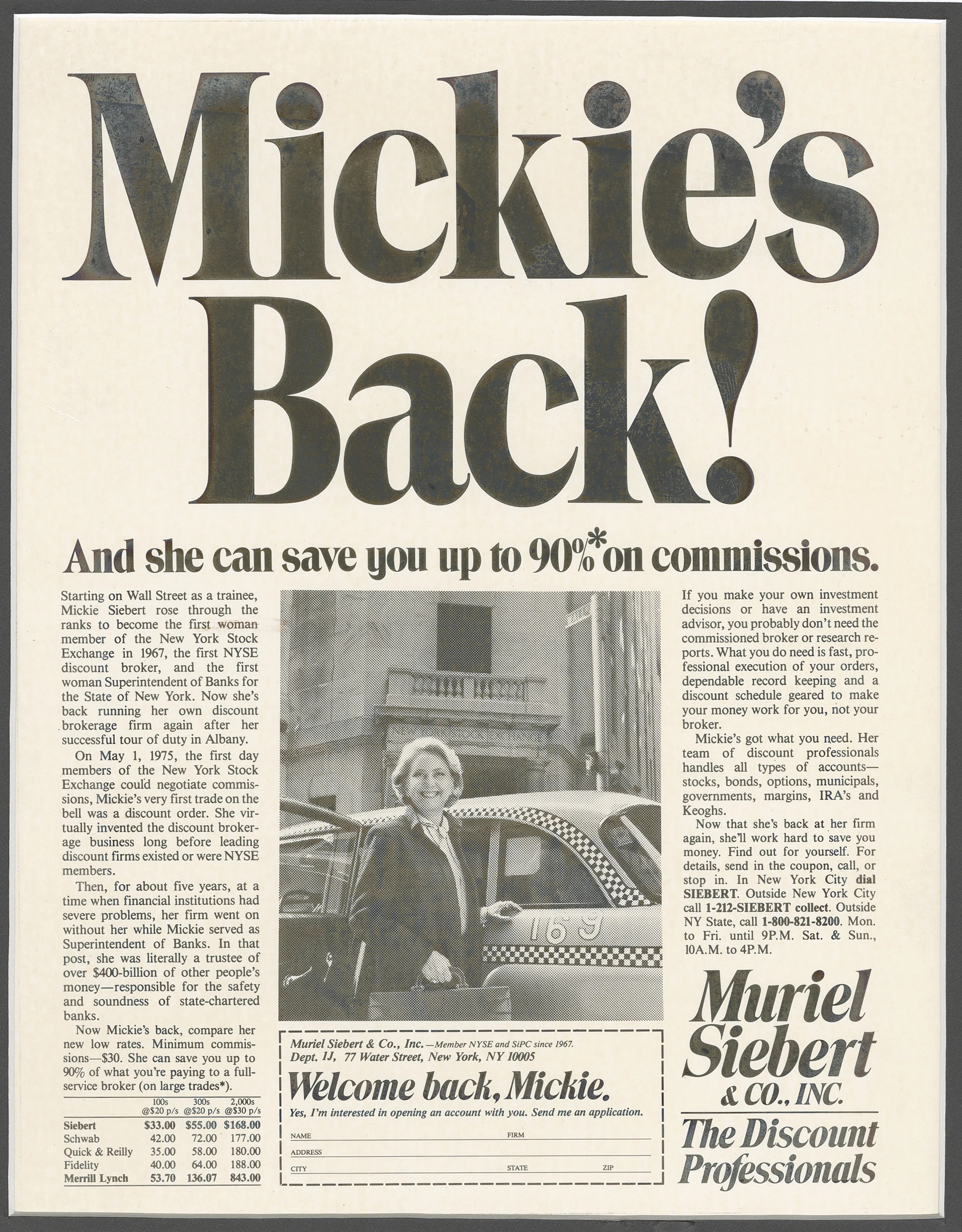
"Mickie’s Back!" Advertisement, 1983, Muriel Siebert & Co., Inc.