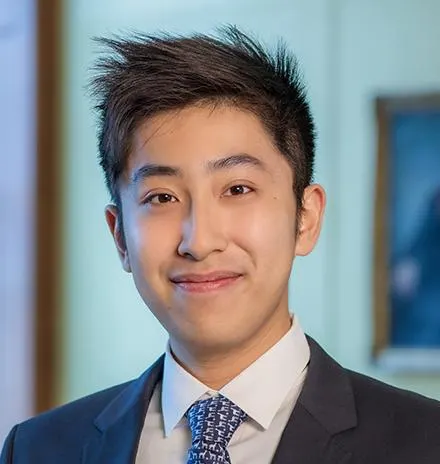
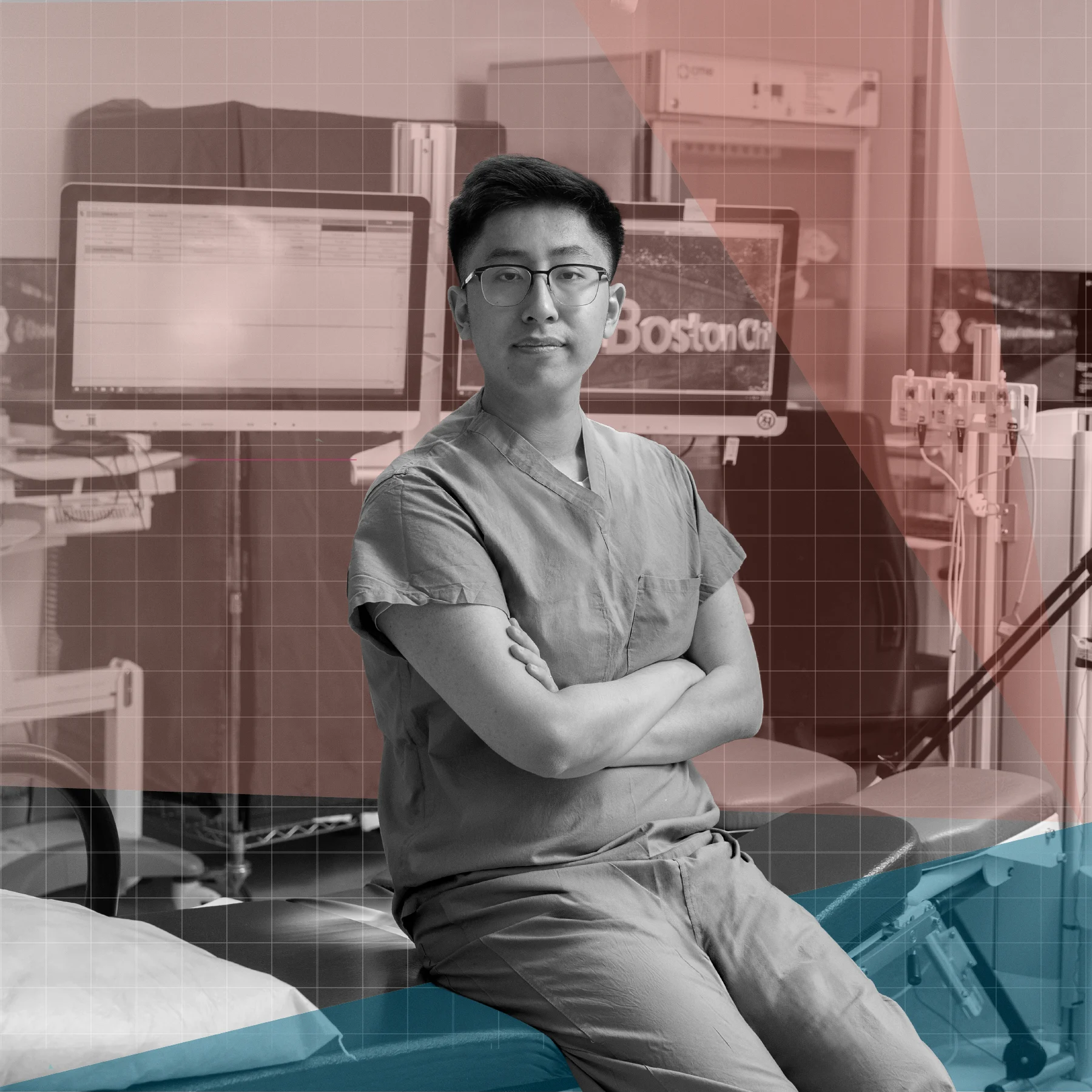
Harvard Business School Assistant Professor Michael Lingzhi Li has spent his career helping public health officials respond to such crises as the Ebola outbreak of the 2010s and the COVID-19 pandemic. But he’s not a doctor; he’s a researcher who focuses on how to translate the latest technical advances into real-world solutions in health care. Now, in partnership with Boston Children’s Hospital (BCH), he has turned his attention to antibiotic resistance and the challenges of bridging the gap between theoretical solutions and patient impact.
Creating an effective algorithm is a multistep process, Li says, starting with identifying a real pain point—“not just a problem that feels like a pain point from an academic point of view”—and understanding where a potential solution would fit in the clinical workflow. It was during a conversation with a doctor at BCH, where Li is now the codirector of the Computational Healthcare Analytics Program, that he learned that the standard of care for treating children with recurring urinary tract infections was prophylactic antibiotics. The approach worked for many but not all, and Li envisioned an AI tool that could reduce overprescribing by helping doctors determine which patients would benefit from the treatment.
In 2018, Li and his collaborators began to build an algorithm that would predict the effect of the antibiotic treatment and recommend an action to take. In the process, they realized that in addition to building an accurate algorithm, they had to address two challenges: how to rigorously evaluate the system in a way that would convince physicians of its effectiveness without relying on a randomized controlled trial, and how to ensure interpretability so that clinicians could understand and trust the algorithm’s recommendations and apply them in practice. These challenges have since shaped distinct research directions that Li has worked on extensively.
The final challenge was implementation. That’s where Li and his BCH collaborators are now. “Our algorithm works in that it can fairly accurately predict if antibiotics would be useful to a particular patient,” Li says. “The question is, when we put it in the hands of the clinicians, do they choose to use it, and if so, does the tool help patients? That’s the true test.”
Implementing the AI tool in 12 clinics associated with BCH has required changing hospital workflows and operating procedures to ensure patients get the tests needed to generate data required to run the algorithm. The team also developed streamlined consent forms for exhausted parents of crying children and even transported urine samples via Uber to ensure prompt testing.
With more than 60 patients—some as young as six-months-old—enrolled in the ongoing study, the early results are promising. A long-term goal is to gain FDA approval of the AI tool as a medical device so doctors can use it to help prescribe antibiotics responsibly. The ultimate goal is having the algorithm become a model for the future of AI medical tools.
“There have been families that have said this AI-assisted care has helped them throughout their care journey,” Li says. “It makes me feel most grateful that my research can benefit patients in real-world clinical environments.”
Photo credit: Jessica Scranton
This article originally appeared in HBS Magazine, a publication for HBS alumni.