American research institutions have long drawn some of the world’s most promising minds, many of whom go on to power R&D at major US companies. But funding cuts have made US labs less appealing, threatening a critical talent pipeline for potentially a generation.
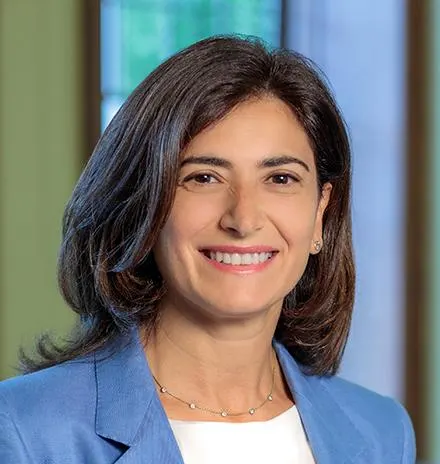
Harvard Business School Professor Raffaella Sadun, who asked early-career scientists about their aspirations both before and after universities began to lose funding in early 2025, says the “uncertainty of the moment” is significantly reshaping their plans: Scientists report being more than 20 percentage points less likely to pursue academia or stay in the United States—and many say they regret pursuing doctoral degrees.
“These are not the complaints of established scientists defending their budgets, but rather the stated intentions of the next generation—the scientists who would, in ordinary times, become the principal investigators of the future,” Sadun and her fellow researchers write in the June working paper “Before the Exodus? Young Scientists and the Future of US Science.”
Even before the US government cut billions of dollars in research grants, employment at colleges and universities hadn’t completely recovered from early pandemic cuts, according to government data analyzed by the American Association of University Professors. Economic uncertainty and cautious talent investment across academia could further shape where people choose to build careers—potentially changing the future supply of workers and researchers not only in higher education, but in other fields.
Sadun, the Charles Edward Wilson Professor of Business Administration, partnered on the study with Daniela Scur, professor at Monash University in Australia, and Pierre Azoulay, professor at MIT’s Sloan School of Management.
‘Something was clearly present in the scientists’ minds’
A few years ago, Scur approached Sadun with the idea of studying how biomedical labs are run, leading to the Scientific Labs Management Project, which aims to compile data from 2,466 research facilities in the US.
“We thought it could be really interesting to get a sense of how this specialized human capital is being managed and whether these differences matter for the productivity or the quality of scientific outputs,” says Sadun, who has studied management best practices in retail, manufacturing, schools, and hospitals.
In early 2025, the Trump Administration froze or terminated some $3 billion in National Institutes of Health grants, affecting about 3,800 projects. The proposed 2026 budget calls for reducing NIH spending by 39% and cutting National Science Foundation costs by 55%. In response, multiple universities have announced cuts to doctoral programs, and some have laid off staff.
Scientists from abroad have faced additional uncertainty about their ability to remain in the country, as more than 1,400 international students and scholars had their visas revoked or their immigration status terminated. Plus, foreign-born scientists, who earn about half of all science, technology, engineering, and mathematics doctoral degrees in the US, encountered new rules that made it more difficult for US companies to hire them and subjected them to heightened screening.
“Serendipitously, this [study] happened when the politics around the funding of science and the immigration of scientists started to change, and as we were running the interviews, it was impossible not to notice that something was clearly present in the scientists’ minds,” Sadun says.
Scientists pursuing academia declined sharply
The researchers say the intentions and satisfaction of early-career scientists might signal their likelihood of quitting. Younger professionals have invested less in their careers than established peers and may be more likely to leave in response to changes in the job market.
In March 2025, the researchers sent a survey to 13,240 doctoral students and postdoctoral fellows in biomedical research labs, asking the scientists three questions about their career intentions both before and after the policy changes:
How likely are you to stay in academia?
How likely are you to stay in the US?
How satisfied are you with having pursued a PhD in science?
The 916 people who responded answered each question twice, once “for now” and a second time to reflect how they felt six months ago. Comparing the answers between those periods, the researchers found:
The share of scientists who said they would likely stay in academia fell 22 percentage points to 44%.
The number of scientists who thought they were likely or very likely to stay in the US slid 21 points to 72%.
Their satisfaction with having pursued a doctorate dropped 16 percentage points to 76%.
The researchers noted that the decline was similar for scientists in labs with secure, multiyear grants, as well as those in labs with more precarious funding streams. As the next generation reconsiders its commitment to American science, the impact is bound to be significant, the research team says.
“When young scientists leave or never arrive, a generation of mentorship, tacit knowledge transmission, and scientific capacity is lost. These effects are not easily undone,” they write. “What can be disrupted in a single year may take a generation to rebuild.”
What leaders in academia—and beyond—can do
Sadun notes that some of the frozen funding was later restored, and widespread departures may never happen. But the indicators are alarming enough that Sadun suspects some research institutions will have trouble holding onto workers.
The implications extend well beyond academia. For business leaders, Sadun says the shifting research landscape presents both opportunities and risks—and she offers some ways to respond:
Rethink where you locate R&D
Academic research and corporate R&D often cluster in university-linked innovation hubs, like Boston and San Francisco. If those relationships weaken, multinational firms may be better positioned to shift to other places where talent is located, says Sadun.
Prepare for an idea drought
As university research funding declines, private labs may want to invest in developing their own research pipelines to help fill the gap. Sadun fears the first thing to go will be riskier research bets, so she says protecting moonshots is important. “You are potentially missing a big supply of ideas, not necessarily this year, but five or 10 years from now,” she says.
Image created with asset from AdobeStock/Gorodenkoff
Have feedback for us?
Before the Exodus? Young Scientists and the Future of U.S. Science
Azoulay, Pierre, Raffaella Sadun, and Daniela Scur. "Before the Exodus? Young Scientists and the Future of U.S. Science." NBER Working Paper Series, No. 35330, June 2026.