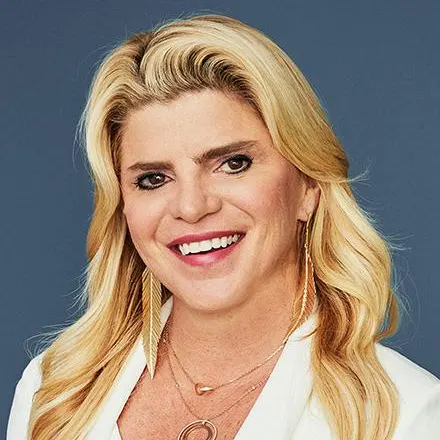

This is an excerpt from the book Unspeakable: The Taboo Topics We Avoid and How to Talk About Them by Christina Wing. Published by Harvard Business Review Press in October 2026.
Not long ago, someone who drove a Tesla was presumed to care about the environment, and you might reasonably guess they leaned left. But during 2025, as Tesla founder Elon Musk became closely aligned with a Republican presidential administration, buying a Tesla became a marker of right-wing politics.
Leaders should seek to build their political IQ just as they become conversant on issues around economics, finance, and technology.
As a result of all these changes, silent assumptions have become a source of error rather than efficiency. When people’s political leanings were more predictable, you could get away with avoiding the subject and relying on inference. That doesn’t work so well anymore. Misreading the beliefs of employees, partners, clients, or stakeholders can lead to strained relationships, damaged trust, and unnecessary conflict.
For leaders, the implication is clear: If assumptions are unreliable, disengagement isn’t a solution. The only way to understand how others see the world is to ask, listen, and engage—carefully and respectfully. Avoiding political conversation doesn’t preserve neutrality. It preserves ignorance.
Four techniques to keep political discussions civil and respectful
Up to this point, I’ve focused on why leaders need to engage with politics rather than avoid it. Once you accept that premise, the real question becomes how to do so without damaging trust, relationships, or organizational cohesion. Here are four techniques I rely on when teaching, advising, and leading.
Encourage debate, but set norms and try to see all sides
As tempting as it is to tune out when political acrimony becomes too loud, we should resist that impulse. Leaders should seek to build their political IQ just as they become conversant on issues around economics, finance, and technology.
In my classes I use a few techniques to help build these skills. I make clear that the goal of our conversations is to learn, not to change anyone’s mind. I also ask people to focus on issues rather than politicians or candidates. (You’ll notice there are no current political figures mentioned by name in this chapter.) I ask people to listen carefully and respectfully when others are speaking and not to start thinking about what they’re going to say in response. No one is allowed to interrupt. I encourage them to focus on facts, which sounds like an easy thing to do but often isn’t.
In my experience the people who speak most loudly about political issues also spend too much time consuming biased or one-sided media coverage—and as a result, they don’t really understand all sides of issues.
Once we’ve established ground rules, I encourage people to see all sides. In one exercise, I’ll ask the left-hand side of the room to take and argue for one position and the right-hand side to take and advocate for the other. Requiring people to try to understand and articulate the case for a stance they don’t believe in can help them reflect and better understand what they do believe.
There are other techniques, but the overall point is this: Talking about politics in a productive and collegial manner is a skill. If you practice, you can get better at it.
Be deliberate about self-disclosure
I want people to know how to talk about politics and be more willing to do it, but even so I recognize the importance of boundaries and limits. In a professional setting I don’t believe people should wear their personal politics on their sleeves, which is why I encourage thoughtful and deliberate self-disclosure at work.
Creating and strengthening relationships is a vital part of business, especially for those in client-facing roles. There are times when you know you’re working with someone who fundamentally disagrees with you about political issues. If I’m in a situation like this, am I going to bring an issue up or try to initiate a debate? Probably not.
There are also times when revealing a political view can build trust or signal openness. There are many more times when it creates unnecessary friction. Here’s a simple example: putting a political bumper sticker on your car. What purpose is that serving? Do you really think the sticker is going to cause people to vote differently? It’s more likely to cause people to beep at you, make rude hand gestures, or key your car in a parking lot. In our advisory work, my team sometimes picks a client up at the airport or drives them back to their hotel after a meal together. One of my employees has a political bumper sticker on her car, and I wish it wasn’t there.
I haven’t and wouldn’t ban bumper stickers—people can disagree about where free expression ends and professional judgment begins—but the trade-off is real. In many professional contexts there is more to lose than to gain from overt political signaling.
Reframe political discussion to shift from winning to understanding
Three of my dearest friends hold political views that are diametrically the opposite of my own. We don’t let that interfere with our friendship, and we’ve learned to talk to each other respectfully and with a learning mindset. When political topics come up, I’m not trying to prove that I’m right or they’re wrong. I’m trying to understand why they see the world the way they do—and to test whether my own views hold up under scrutiny. And when current events unfold as I expected, I don’t say, “I told you so.” I treat political conversations as opportunities to learn, not contests to be won.
Productive politics, like productive leadership, involves negotiation, persuasion, and compromise.
In organizational settings I encourage people to look first for areas of overlap. Productive politics, like productive leadership, involves negotiation, persuasion, and compromise. Finding shared ground makes disagreement less threatening and dialogue more constructive. If more leaders approached political discussions with curiosity rather than certainty, the temperature would drop quickly.
Overinvest in assessing the political risks
One of the most common mistakes leaders make is underestimating political risk, especially when entering new markets or launching new ventures. During the early 2000s, when it seemed like everyone agreed on the positive effects of globalization, it became easy for people to talk about the upsides of companies expanding around the globe—without sufficiently recognizing the complexities and potential risks.
Very quickly, that dynamic has changed. My global advisory work has made me hyperaware of just how tricky it can be to navigate the political and regulatory landscapes in different countries. I’ve worked with clients in countries where someone who publicly disagrees with the government can be jailed.
I’ve also worked with companies who’ve tried to set up shop in the United States without any awareness of rules or norms around issues such as worker compensation insurance, workplace health and safety, or sick leave and maternity leave. Succeeding in a new venture is hard, and trying to do business in a place where you don’t understand the rules increases your risks of failure. Growth incentives often push leaders to move quickly.
My advice for global expansion is the opposite: Slow down until you grasp the complex politics of new markets. Find the best local advisers you can. Tell them that you want to protect your downside, that you want to understand what can go wrong, and that you aren’t assuming what worked in other markets will work there.
Politics is often the variable that leaders fail to model—and the one that ultimately derails promising opportunities.
Reprinted by permission of Harvard Business Review Press. Excerpted from Unspeakable: The Taboo Topics We Avoid and How to Talk About Them by Christina Wing. Copyright 2026. All rights reserved.